

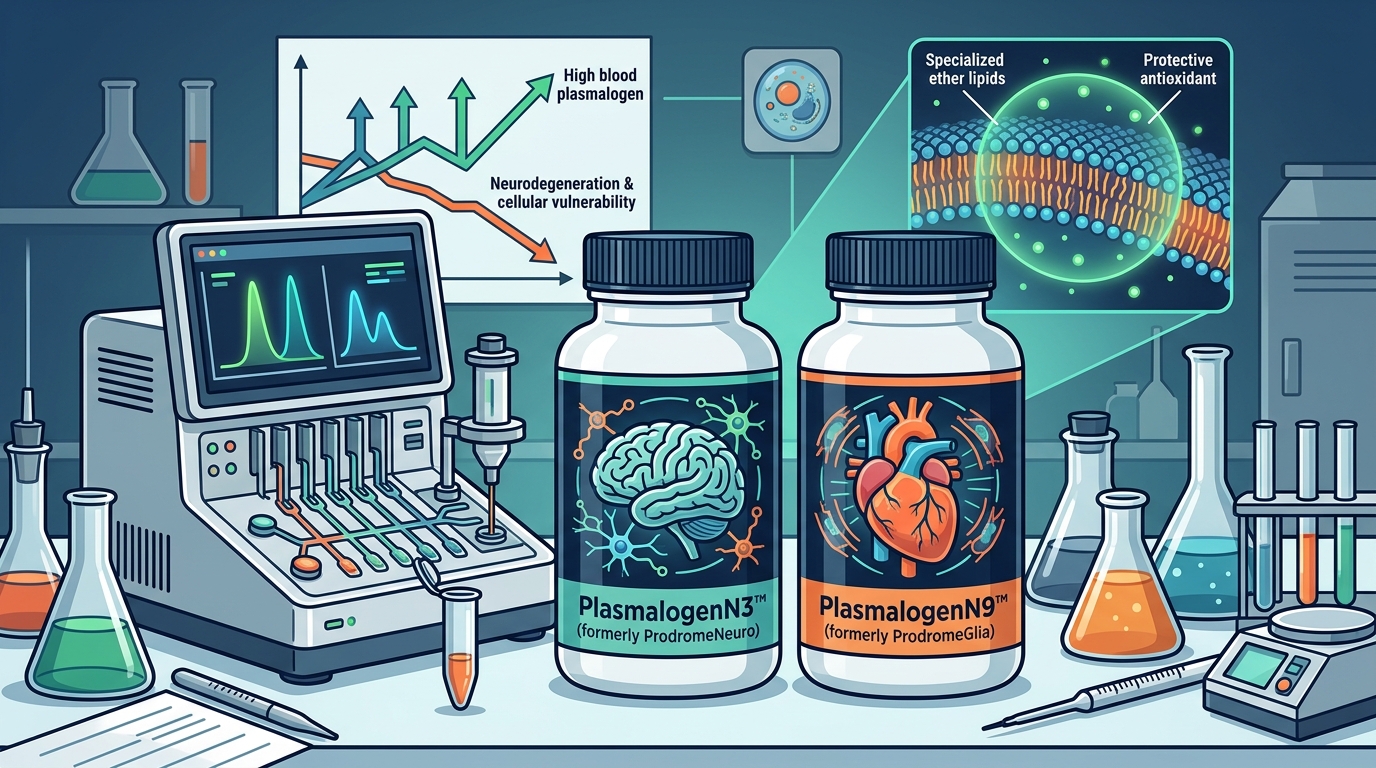
Plasmalogens are specialized ether lipids that serve as the primary antioxidant defense system within cell membranes. Research indicates that people with high blood plasmalogens were 80% less likely to experience dementia, highlighting their critical role in long-term neurological preservation. As we age, these vital molecules decline rapidly, leading to cellular vulnerability and systemic inflammation. This guide explores the biochemistry of plasmalogens, their impact on brain and heart health, and how targeted supplementation can support healthy aging.
What Are Plasmalogens?
Plasmalogens are a unique class of phospholipids found in every cell membrane of the human body. Unlike standard fatty acids, plasmalogens contain a vinyl ether bond at the sn-1 position, which provides exceptional stability against oxidative stress. This structural feature allows them to act as sacrificial antioxidants, absorbing free radicals before they can damage DNA or proteins.
Plasmalogens are critical for maintaining membrane fluidity and integrity. Without adequate levels, cell membranes become rigid and less responsive to signaling molecules. This decline is a hallmark of aging, affecting everything from cognitive function to immune response. The body naturally produces plasmalogens in the peroxisomes, but this production capacity diminishes significantly after age 40.
Understanding plasmalogens requires looking at them through the lens of lipid biology. They are not merely structural components but active participants in cellular communication. Their presence ensures that receptors on the cell surface can function correctly, allowing the body to respond to hormones, neurotransmitters, and environmental cues with precision.
Plasmalogens and Brain Health
The brain is the most lipid-rich organ in the body, requiring robust membrane integrity to support rapid neural signaling. White matter plasmalogens provide structural support for myelin, the protective sheath that insulates nerve fibers. When myelin is compromised, signal transmission slows, leading to cognitive decline and neurological disorders.
Grey matter plasmalogens, on the other hand, support functional signaling and neurotransmission. They facilitate the release of neurotransmitters and the activity of receptors, directly influencing mood, memory, and focus. Studies suggest that maintaining high levels of grey matter plasmalogens is essential for preserving cognitive reserve in later life.
ProdromeGlia™ is specifically engineered to target white matter plasmalogens, supporting the structure and stability of myelin. By focusing on the structural integrity of the nervous system, this formulation helps maintain the physical foundation of brain health. This approach aligns with the broader scientific consensus that membrane health is the first line of defense against neurodegeneration.
For those seeking to support functional signaling, PlasmalogenN3™ addresses grey matter needs. It focuses on the dynamic aspects of brain health, including receptor activity and neurotransmitter balance. Together, these products offer a comprehensive strategy for protecting the brain from age-related decline.
Cardiovascular and Cellular Support
Plasmalogens are not limited to the brain. They play a vital role in cardiovascular health by strengthening heart muscle cells. The heart is constantly exposed to oxidative stress from metabolic activity, and plasmalogens help prevent premature oxidation of cardiac tissues. This protection supports long-term heart function and reduces the risk of age-related cardiac issues.
Beyond the heart, plasmalogens support lung cell membranes, contributing to antioxidant defense at the cellular level. They also play a role in hair and nail health by supporting the integrity of follicles and nail beds. Healthier, thicker hair and faster-growing nails are often indicators of robust systemic lipid status.
The decline of plasmalogens affects all 30 trillion cells in the body. When levels drop, the compounding effect leads to systemic inflammation and reduced cellular resilience. This is why a holistic approach to supplementation is necessary. Targeted nutrition that supports healthy cellular membranes can help flatten the lipid decline curve, promoting vitality across multiple organ systems.
Prodrome Product Ecosystem
Prodrome Science offers a range of products designed to support plasmalogen levels through different mechanisms. Each product is formulated based on 30+ years of lipid and metabolomic research led by neuroscientist Dayan Goodenowe, PhD. The goal is to provide health professionals and individuals with tools to address lipid biology at the membrane level.
| Product | Primary Focus | Key Benefit |
|---|---|---|
| ProdromeGlia™ | White Matter | Supports myelin structure and membrane integrity |
| PlasmalogenN3™ | Grey Matter | Enhances signaling and neurotransmitter function |
| PC+ | General Membrane | Supports overall cellular membrane health |
| ProdromeGLIA-PC+ | Combined | Integrates glial support with phosphatidylcholine |
| ProdromeNEURO-PC+ | Neurological | Targets neurological function with lipid support |
Prodrome BDMC™ is another key component in the ecosystem, focusing on curcuminoid delivery. Curcumin is a powerful anti-inflammatory compound, but its bioavailability is often limited. BDMC enhances the absorption and efficacy of curcumin, providing additional support for oxidative balance. This product complements the plasmalogen formulations by addressing inflammation from a different angle.
The integration of these products allows for a personalized approach to lipid health. Whether the goal is to support brain function, heart health, or general cellular resilience, Prodrome provides targeted solutions based on scientific evidence. The company also offers a blood test kit to help individuals monitor their plasmalogen levels and track the effectiveness of their supplementation regimen.
Testing and Monitoring Levels
Monitoring plasmalogen levels is essential for understanding individual lipid status. The ProdromeScan™ blood test kit provides detailed insights into plasmalogen concentrations, allowing for data-driven decisions about supplementation. This testing capability is a cornerstone of the Prodrome approach, emphasizing precision and personalization.
Regular testing helps identify deficiencies early, before they manifest as significant health issues. By tracking changes in plasmalogen levels over time, individuals can assess the impact of their lifestyle and supplementation choices. This proactive approach to health management is increasingly recognized as a key factor in longevity and disease prevention.
Health professionals can also benefit from the science blog and professional resources provided by Prodrome. These materials offer in-depth information on lipid biology, clinical protocols, and the latest research findings. Staying informed about the latest developments in plasmalogen science is crucial for anyone looking to optimize their health through targeted nutrition.
Key Takeaways
- Plasmalogens are specialized ether lipids that protect cell membranes from oxidative stress.
- High blood plasmalogen levels are associated with an 80% reduction in dementia risk.
- White matter plasmalogens support myelin structure, while grey matter plasmalogens support signaling.
- ProdromeGlia™ and PlasmalogenN3™ target specific brain regions for comprehensive neurological support.
- The ProdromeScan™ blood test kit allows for precise monitoring of plasmalogen levels.
- Plasmalogen production declines with age, making supplementation critical for long-term health.
- Prodrome Science is backed by 30+ years of lipid and metabolomic research.
Frequently Asked Questions
What is the primary function of plasmalogens?
Plasmalogens are the primary antioxidant defense system within cell membranes, protecting cells from oxidative damage and maintaining membrane integrity.
How do plasmalogens affect brain health?
Plasmalogens support both white matter myelin structure and grey matter signaling, which are essential for cognitive function and neurological health.
What is ProdromeGlia™ used for?
ProdromeGlia™ is specifically formulated to support white matter plasmalogens, helping to maintain the structure and stability of myelin in the nervous system.
Can I test my plasmalogen levels at home?
Yes, the ProdromeScan™ blood test kit allows individuals to monitor their plasmalogen levels from the comfort of their home.
Why do plasmalogen levels decline with age?
Plasmalogen production occurs in the peroxisomes, and this natural production capacity diminishes significantly as we age, leading to lower levels in the body.
What is the difference between PlasmalogenN3™ and PC+?
PlasmalogenN3™ focuses on grey matter signaling and neurotransmitter function, while PC+ provides broader support for general cellular membrane health.
Is Prodrome Science backed by scientific research?
Yes, Prodrome Science is built on 30+ years of lipid and metabolomic research led by neuroscientist Dayan Goodenowe, PhD.
Get Started with Prodrome
Take the first step toward optimizing your cellular health with Prodrome Science. Explore the full range of plasmalogen supplements and discover how targeted lipid support can transform your well-being. Visit the science blog to learn more about the latest research, or contact us for personalized guidance. Your journey to healthier cells starts here.