

Targeted membrane phospholipids support neurodegenerative health by maintaining the structural integrity and fluidity of neuronal cell membranes. This foundational stability allows for efficient synaptic signaling, robust mitochondrial energy production, and balanced inflammatory responses. Prodrome Science provides this guide to explain how specialized lipids, particularly plasmalogens, act as the missing layer in cellular resilience. This ultimate guide covers phospholipid homeostasis, synaptic signaling, mitochondrial function, neuroinflammation, and the specific role of plasmalogens in brain health.
Phospholipid Homeostasis
Phospholipid homeostasis is the biological process by which cells maintain the optimal composition and fluidity of their lipid bilayers. This balance is critical for the brain, where neurons rely on precise membrane properties to function correctly. When homeostasis is disrupted, membranes become rigid or unstable, impairing cellular communication and energy production.
The Role of Membrane Fluidity
Membrane fluidity is determined by the ratio of saturated to unsaturated fatty acids within the phospholipid bilayer. High levels of unsaturated fatty acids, such as omega-3 and omega-9, promote flexibility. This flexibility is essential for the proper functioning of membrane-bound proteins, including receptors and ion channels.
Impact on Cellular Integrity
Cellular integrity depends on the ability of the membrane to self-repair and maintain its barrier function. Targeted phospholipids help restore this integrity by providing the necessary building blocks for membrane repair. This process supports the overall health of the neuron, ensuring it can withstand metabolic stress and oxidative challenges.
Synaptic Signaling
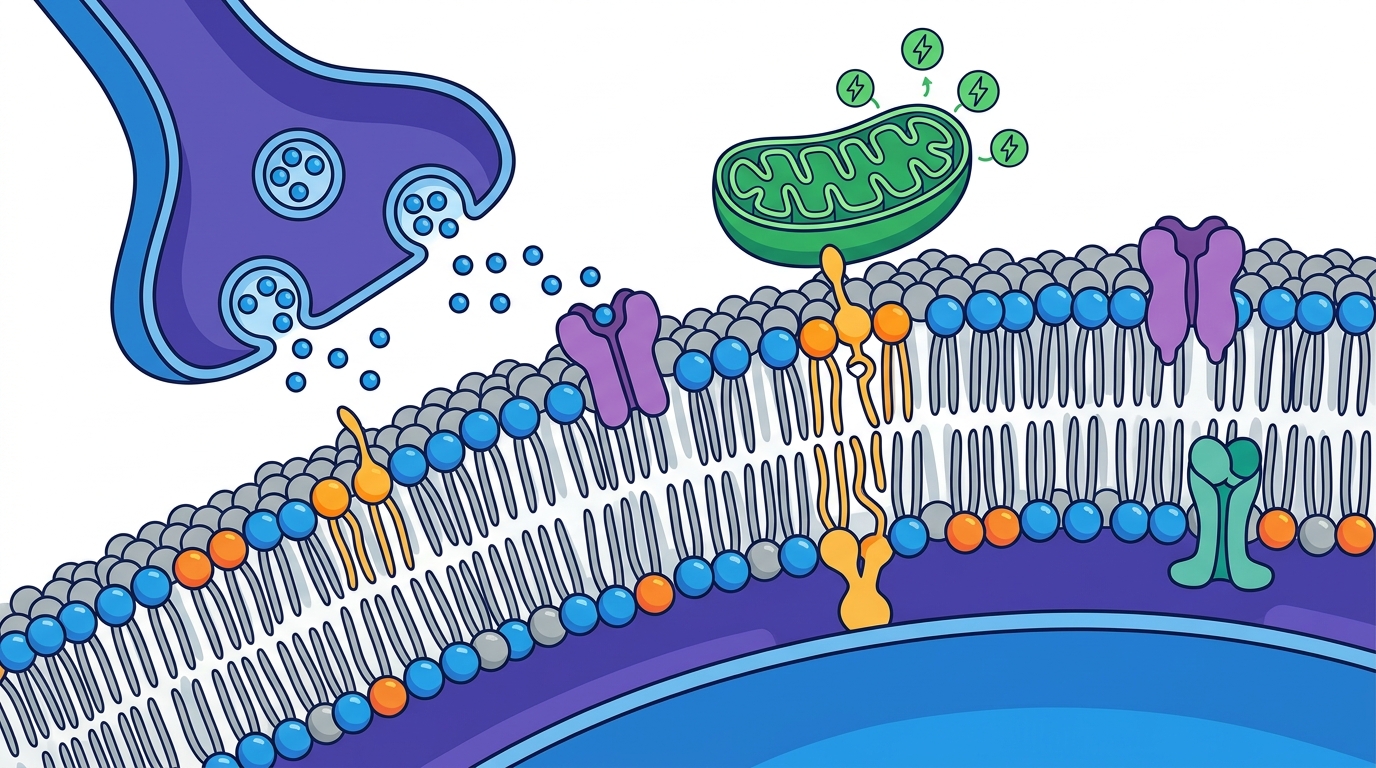
Synaptic signaling is the process by which neurons communicate with each other through the release and reception of neurotransmitters. The efficiency of this communication is heavily influenced by the physical properties of the synaptic membrane. Plasmalogens are particularly enriched in synaptic membranes, where they support the structural dynamics required for rapid signal transmission.
Structural Support for Synapses
Synapses are highly dynamic structures that undergo constant remodeling. The presence of specialized lipids like plasmalogens helps maintain the curvature and flexibility of synaptic vesicles. This structural support ensures that neurotransmitters are released and reabsorbed efficiently, which is vital for cognitive processes such as memory and learning.
Receptor Function and Sensitivity
Neurotransmitter receptors are embedded in the synaptic membrane and require a specific lipid environment to function optimally. Disruptions in membrane composition can alter receptor sensitivity and signaling pathways. By supporting membrane fluidity, targeted phospholipids help maintain the proper conformation of these receptors, promoting healthy neural communication.
Mitochondrial Function
Mitochondrial function is the process by which cells generate energy in the form of adenosine triphosphate (ATP). Neurons are energy-intensive cells that rely heavily on mitochondrial efficiency to maintain their electrical activity. Plasmalogens are concentrated in mitochondrial membranes, where they play a protective role against oxidative stress.
Protection Against Oxidative Stress
Mitochondria are a primary source of reactive oxygen species (ROS) during energy production. The vinyl ether bond in plasmalogens provides unique antioxidant properties that help neutralize ROS. This protection helps preserve mitochondrial membrane integrity and prevents the leakage of pro-apoptotic factors, supporting long-term cellular health.
Energy Production and Efficiency
Efficient energy production requires a stable mitochondrial membrane potential. Disruptions in membrane composition can impair the electron transport chain, reducing ATP output. By supporting mitochondrial membrane stability, targeted phospholipids help ensure that neurons have sufficient energy to perform their complex functions, including synaptic transmission and protein synthesis.
Neuroinflammation
Neuroinflammation is the immune response within the central nervous system, mediated primarily by glial cells such as microglia and astrocytes. While acute inflammation is a protective mechanism, chronic neuroinflammation can contribute to neuronal stress and dysfunction. Plasmalogens have been shown to modulate inflammatory pathways, helping to maintain a balanced immune environment in the brain.
Modulation of Microglial Activity
Microglia are the resident immune cells of the brain and play a key role in neuroinflammation. Plasmalogens influence microglial activation by suppressing the production of pro-inflammatory cytokines. This modulation helps prevent excessive inflammatory responses that can damage healthy neurons and disrupt neural networks.
Anti-Inflammatory Properties
The anti-inflammatory properties of plasmalogens are attributed to their ability to stabilize cell membranes and reduce oxidative stress. By maintaining membrane integrity, plasmalogens help prevent the release of damage-associated molecular patterns (DAMPs) that trigger inflammatory cascades. This supports a healthier inflammatory balance, which is essential for long-term brain health.
Plasmalogens
Plasmalogens are a specialized class of ether phospholipids that are highly concentrated in the brain and other metabolically active tissues. They are distinct from conventional ester phospholipids due to the presence of a vinyl ether bond, which confers unique biophysical and antioxidant properties. Prodrome Science focuses on providing targeted plasmalogen precursors to support cellular health.
Types of Plasmalogens
There are two primary types of plasmalogens: DHA-type and oleic-based. DHA-type plasmalogens are enriched in gray matter and support neuronal signaling, while oleic-based plasmalogens are concentrated in white matter and support myelin integrity. Understanding these distinctions is crucial for selecting the appropriate supplement for specific health goals.
PlasmalogenN3 and PlasmalogenN9
PlasmalogenN3 (formerly ProdromeNeuro) is an omega-3 plasmalogen precursor designed to support gray matter health and synaptic function. PlasmalogenN9 (formerly ProdromeGlia) is an omega-9 plasmalogen precursor that supports white matter integrity and myelin structure. Both products are formulated to provide the specific lipid precursors needed to restore plasmalogen levels in the brain.
Measurement and Monitoring
ProdromeScan is a blood test that measures plasmalogen levels and other key biomarkers of cellular health. It is not a diagnostic tool but rather a method for assessing deviations from optimal biochemical health. This information can help individuals and practitioners make informed decisions about supplementation and lifestyle changes.
Key Takeaways
- Phospholipid homeostasis is essential for maintaining membrane fluidity and cellular integrity in neurons.
- Synaptic signaling relies on the structural support provided by specialized lipids like plasmalogens.
- Mitochondrial function is protected by the antioxidant properties of plasmalogens, which help neutralize oxidative stress.
- Neuroinflammation can be modulated by plasmalogens, which help maintain a balanced immune environment in the brain.
- Plasmalogens are ether phospholipids with unique biophysical properties that support brain health.
- PlasmalogenN3 supports gray matter health, while PlasmalogenN9 supports white matter integrity.
- ProdromeScan measures plasmalogen levels to assess deviations from optimal biochemical health.
- Targeted phospholipids provide a foundational approach to supporting neurodegenerative health.
Frequently Asked Questions
What are plasmalogens?
Plasmalogens are a specialized class of ether phospholipids found in high concentrations in the brain. They play a critical role in maintaining membrane integrity, supporting synaptic signaling, and protecting against oxidative stress.
How do plasmalogens support brain health?
Plasmalogens support brain health by maintaining the structural integrity of neuronal membranes, enhancing synaptic communication, and protecting mitochondria from oxidative damage. They also help modulate neuroinflammation, promoting a balanced immune environment.
What is the difference between PlasmalogenN3 and PlasmalogenN9?
PlasmalogenN3 is an omega-3 plasmalogen precursor that supports gray matter health and synaptic function. PlasmalogenN9 is an omega-9 plasmalogen precursor that supports white matter integrity and myelin structure. Each product targets different areas of the brain based on their specific lipid composition.
Is ProdromeScan a diagnostic test?
No, ProdromeScan is not a diagnostic test. It is a blood test that measures plasmalogen levels and other biomarkers to assess deviations from optimal biochemical health. It provides information that can help guide supplementation and lifestyle decisions.
Can plasmalogens cure neurodegenerative diseases?
No, plasmalogens are not a cure for any disease. They are dietary supplements that support cellular health and function. These statements have not been evaluated by the Food and Drug Administration. This product is not intended to diagnose, treat, cure, or prevent any disease.
Where can I purchase Prodrome products?
Prodrome products are available on the Prodrome website and on Amazon. You can also find information about the Elite Practitioner Program on the Prodrome website, which provides training for health professionals interested in plasmalogen science.
Conclusion
Targeted membrane phospholipids, particularly plasmalogens, play a foundational role in supporting neurodegenerative health. By maintaining phospholipid homeostasis, enhancing synaptic signaling, protecting mitochondrial function, and modulating neuroinflammation, these specialized lipids provide a comprehensive approach to cellular resilience. Prodrome Science offers a range of products, including PlasmalogenN3, PlasmalogenN9, and ProdromeScan, to help individuals and practitioners support brain health through targeted nutrition. For more information on how to integrate plasmalogen science into your practice, explore the Elite Practitioner Program at Prodrome's training resources. To learn more about our products, visit the Plasmalogen collection or read our guide to plasmalogens.