

Phosphatidylserine (PS) is a phospholipid that forms a critical part of cell membranes, including those in the brain. Research indicates that PS supports healthy nerve cell membranes and myelin structure, which are essential for efficient neurotransmission. While studies suggest it may support memory function in specific populations, it acts as a structural component rather than a standalone cure. At Prodrome, we focus on lipid biology to help you understand how these foundational building blocks contribute to overall cellular health.
The Structural Role of PS in Neural Tissues
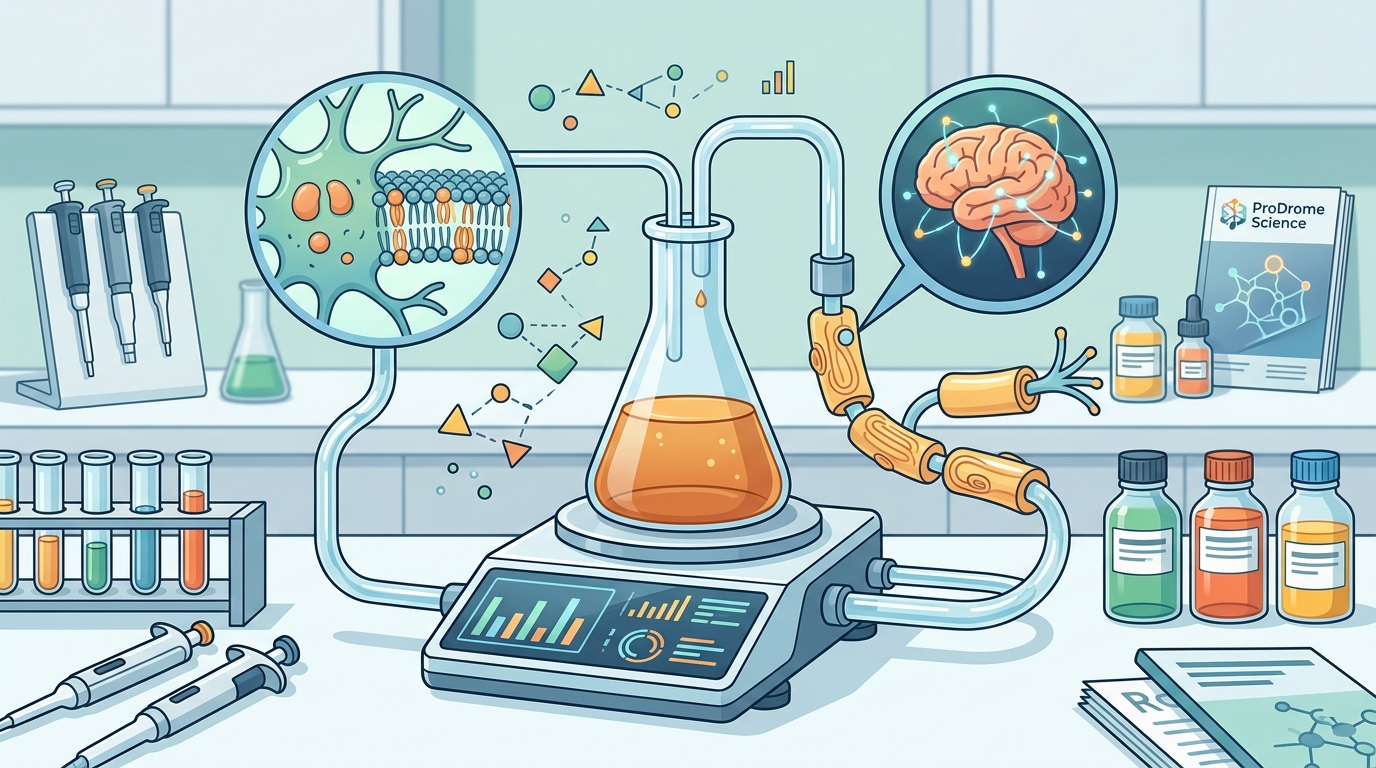
Phosphatidylserine is a specialized lipid located primarily on the inner leaflet of the cell membrane. This specific positioning is vital for maintaining the integrity of the cell boundary. In the brain, PS is required for healthy nerve cell membranes and myelin, the protective sheath that insulates nerve fibers. As the brain ages, biochemical alterations and structural deterioration can occur, potentially impairing the efficiency of neurotransmission. By supporting the structural stability of these membranes, PS helps maintain the physical environment necessary for neural signals to travel effectively.
Evidence for Memory and Cognitive Support
Clinical trials have investigated the relationship between PS supplementation and cognitive performance. One notable double-blind, placebo-controlled trial examined the effects of PS containing omega-3 fatty acids (PS-DHA) in non-demented elderly individuals with memory complaints. The results indicated that PS-DHA may improve cognitive performance in this specific group. This suggests that the combination of the phospholipid backbone and specific fatty acids can support memory abilities in older adults.
Another area of research involves children. A randomised, double-blind, placebo-controlled clinical trial found that PS significantly improved short-term auditory memory in children. These findings demonstrate that PS can support memory functions across different age groups. However, it is important to note that these studies measure specific cognitive tasks and do not imply a cure for any condition. The focus remains on supporting the brain's natural ability to process and retain information through structural maintenance.
The Importance of Fatty Acid Composition
The brain is highly enriched with docosahexaenoic acid (DHA), and brain PS has a high DHA content. This specific fatty acid profile is crucial for membrane fluidity and function. When considering PS supplementation, the source and fatty acid composition matter. Soy-derived PS has shown effects on brain function similar to bovine sources in preliminary animal research, but human studies often focus on specific formulations like PS-DHA. Understanding that PS is not a single uniform molecule but a class of lipids with varying fatty acid tails helps explain why different products may have different effects.
At Prodrome, we emphasize the importance of lipid specificity. Just as different oils serve different purposes in cooking, different lipid profiles serve different biological functions. The presence of DHA in PS supports the high metabolic demand of brain cells. This biochemical nuance is why we encourage consumers to look at the specific fatty acid content of any lipid supplement they consider.
Prodrome's Approach to Lipid Health
While phosphatidylserine is a well-studied phospholipid, Prodrome focuses on a broader category of specialized lipids known as plasmalogens. Plasmalogens are ether phospholipids that are highly concentrated in tissues with high metabolic demand, such as the brain and heart. They play a foundational role in membrane structure, antioxidant defense, and cellular communication. Our products, such as PlasmalogenN3™ (formerly ProdromeNeuro) and PlasmalogenN9™ (formerly ProdromeGlia), are designed to support the availability of these critical lipids in cell membranes.
We believe that understanding the full spectrum of lipid biology is key to supporting brain health. By providing high-quality, research-backed lipid precursors, we aim to help individuals maintain the structural integrity of their cells. Our approach is grounded in the science of how lipids function within the body, offering a comprehensive view of cellular health beyond a single compound. according to Phosphatidylserine and the
Key Takeaways
- Phosphatidylserine is a structural phospholipid essential for healthy nerve cell membranes and myelin.
- Research suggests PS may support memory function in both elderly individuals and children, depending on the formulation. according to Phosphatidylserine containing omega
- The fatty acid composition of PS, particularly the presence of DHA, is critical for brain-specific functions.
- PS supports the physical structure of cells, which is necessary for efficient neurotransmission.
- Prodrome offers specialized plasmalogen supplements that support broader lipid biology and cellular health.
- Always consult with a healthcare professional before starting any new supplement regimen.
Frequently Asked Questions
What is phosphatidylserine?
Phosphatidylserine is a phospholipid found in the cell membranes of all living cells. It is particularly important in the brain, where it supports the structure of nerve cells and myelin.
Does PS improve memory in everyone?
Studies have shown benefits in specific populations, such as non-demented elderly with memory complaints and children. Individual results may vary, and PS is intended to support structure and function, not to treat any condition.
How is PS different from plasmalogens?
Both are phospholipids, but they have different chemical structures. Plasmalogens contain an ether bond, while PS contains an ester bond. They serve complementary roles in membrane health and cellular function.
Can I take PS with other supplements?
It is generally safe to take PS with other lipid-based supplements, but you should always consult with a healthcare provider to ensure compatibility with your specific health needs.
Where can I find more information on lipid health?
You can explore our science blog and product pages to learn more about how specialized lipids like plasmalogens support brain and cellular health.
Conclusion
These statements have not been evaluated by the Food and Drug Administration. This product is not intended to diagnose, treat, cure, or prevent any disease.