

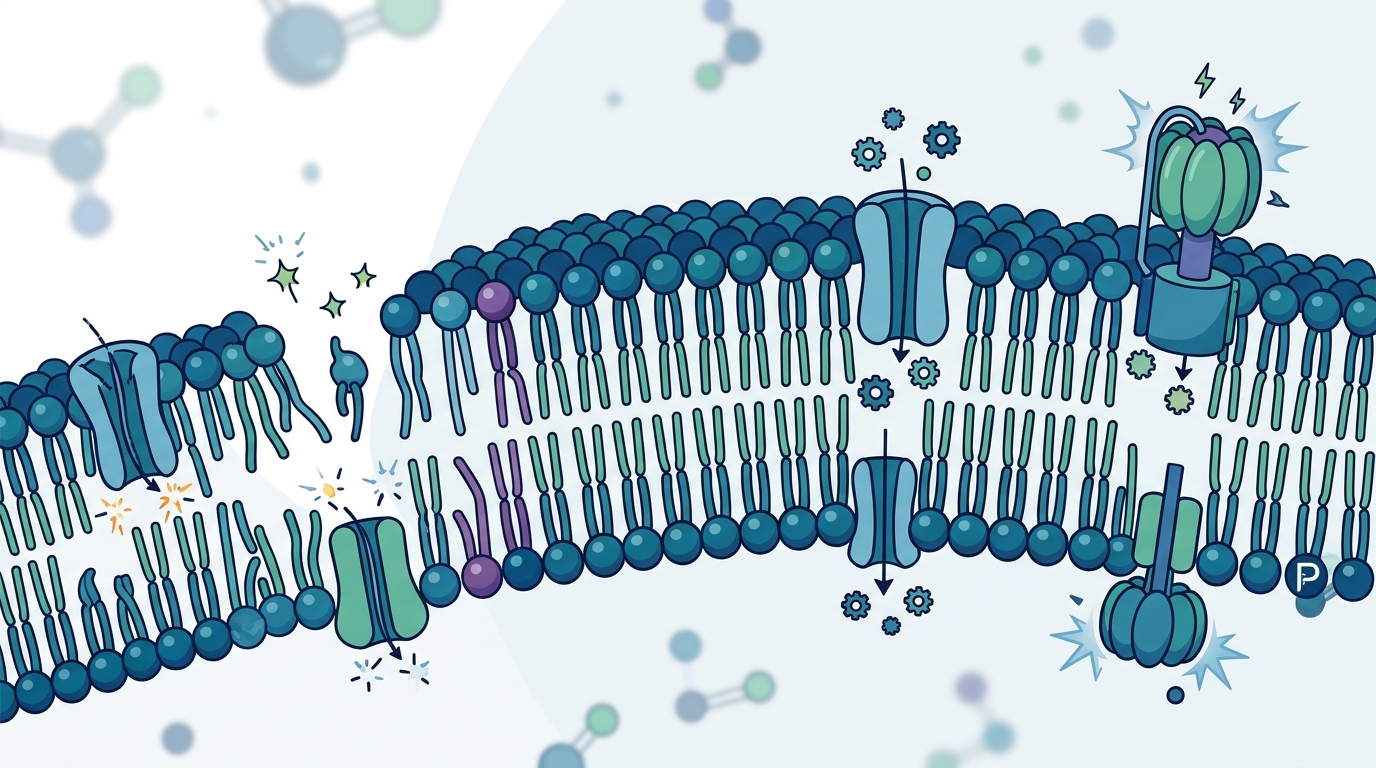
When phospholipid balance breaks down, brain cell membranes lose structural stability and fluidity, which can impair cellular communication and energy production. Prodrome focuses on this specific lipid biology to help maintain the integrity of these essential cellular components. Understanding how these specialized lipids function provides a clearer picture of why membrane health is a foundational aspect of overall cellular resilience.
The Structural Role of Phospholipids
Phospholipids are the primary building blocks of all cell membranes, forming a bilayer that separates the cell interior from the external environment. In the brain, these membranes are particularly dense and complex due to the high metabolic demands of neural tissue. The specific arrangement of fatty acids within these phospholipids dictates the membrane's physical properties, including its thickness and flexibility.
Research indicates that the unique structure of certain phospholipids, such as plasmalogens, contributes significantly to membrane fluidity. A study published in FEBS Letters details how the vinyl-ether bond in plasmalogens allows membranes to remain flexible even under stress. This structural resilience is critical for maintaining the proper environment for membrane-bound proteins to function correctly. according to Do the affective
Fluidity and Cellular Signaling
Cell membrane fluidity is not a static state; it is a dynamic property that changes in response to temperature, metabolic activity, and lipid composition. When the balance of phospholipids shifts, the membrane may become too rigid or too loose, both of which can hinder the movement of signaling molecules. This disruption can slow down the transmission of signals between cells, a process that is vital for brain function.
Plasmalogens are highly concentrated in tissues with high metabolic demand, including the brain. Their presence helps maintain the optimal fluidity required for efficient signal transduction. By supporting the physical environment in which these signals travel, balanced phospholipid levels promote healthy cellular communication. This is a key area of focus for plasmalogen science, which explores how lipid composition influences cellular behavior.
Oxidative Defense and Membrane Stability
Cell membranes are constantly exposed to oxidative stress, which can damage lipid structures and compromise their integrity. Phospholipids, particularly those with specific fatty acid chains, play a role in antioxidant defense mechanisms. When the balance of these lipids is disrupted, the membrane becomes more susceptible to oxidative damage, leading to increased permeability and potential loss of cellular contents.
Plasmalogens have been shown to possess intrinsic antioxidant properties that help protect the membrane from oxidative injury. A review in Lipids in Health and Disease examines how plasmalogens influence membrane behavior and support cellular health in high-energy-demand tissues. This protective role is essential for maintaining the long-term stability of brain cell membranes, especially as metabolic demands change over time.
Lipid Changes and Aging
As the body ages, the composition of cell membranes undergoes natural changes. The levels of certain specialized phospholipids, including plasmalogens, tend to decrease with age. This shift in lipid profile can affect the membrane's ability to maintain its structural and functional properties. Understanding these age-related changes is important for developing strategies that support cellular health throughout the lifespan.
Prodrome's research highlights the importance of maintaining healthy lipid levels as part of a broader approach to cellular support. The company's products, such as PlasmalogenN3™ (formerly ProdromeNeuro) and PlasmalogenN9™ (formerly ProdromeGlia), are designed to provide the precursors needed for the body to synthesize these specialized lipids. By supporting the body's natural lipid synthesis pathways, these supplements aim to help maintain membrane integrity and function.
Practical Implications for Cellular Health
Maintaining phospholipid balance is a complex process that involves multiple metabolic pathways. While diet and lifestyle play a role, the body's ability to synthesize certain specialized lipids can be limited. This is where targeted supplementation may offer a practical approach to supporting membrane health. By providing the necessary building blocks, supplements can help ensure that the body has the resources it needs to maintain healthy cell membranes.
For health professionals, understanding the nuances of lipid biology is essential for providing informed guidance. The Elite Practitioner Program offers advanced training in plasmalogen science, equipping practitioners with the knowledge to support their clients' cellular health. This educational resource helps bridge the gap between complex biochemical research and practical application in a clinical or wellness setting.
Key Takeaways
- Phospholipids are the primary structural components of cell membranes, determining their fluidity and stability.
- Plasmalogens are specialized phospholipids with unique structural properties that support membrane integrity and antioxidant defense.
- Disruptions in phospholipid balance can impair cellular signaling and increase susceptibility to oxidative stress.
- Plasmalogen levels naturally change with age, making their maintenance an important aspect of long-term cellular health.
- Prodrome's supplements provide precursors for the synthesis of specialized plasmalogens, supporting the body's natural lipid pathways.
- Health professionals can access advanced training through the Elite Practitioner Program to better understand and apply plasmalogen science.
Frequently Asked Questions
What are plasmalogens?
Plasmalogens are a specialized type of phospholipid found in cell membranes. They are characterized by a vinyl-ether bond that gives them unique structural and antioxidant properties.
Why are plasmalogens important for brain health?
Plasmalogens are highly concentrated in brain tissue, where they help maintain membrane fluidity and support cellular communication. Their presence is crucial for the proper function of neural cells.
How do phospholipids affect membrane fluidity?
The fatty acid composition of phospholipids determines the physical properties of the membrane. Balanced phospholipid levels help maintain optimal fluidity, which is necessary for efficient cellular signaling.
Can supplements help maintain phospholipid balance?
Supplements like PlasmalogenN3™ and PlasmalogenN9™ provide precursors that the body can use to synthesize specialized plasmalogens. This supports the body's natural ability to maintain healthy cell membranes.
What is the Elite Practitioner Program?
The Elite Practitioner Program is an educational resource for health professionals. It provides advanced training in plasmalogen science and lipid biology, helping practitioners support their clients' cellular health.
Are Prodrome products available on Amazon?
Yes, Prodrome products are available on Amazon. This makes it easier for consumers to access their plasmalogen supplements and support their cellular health.
Conclusion
Phospholipid balance is a fundamental aspect of brain cell membrane integrity. When this balance is disrupted, it can affect membrane fluidity, signaling, and oxidative defense. Prodrome is dedicated to advancing the science of plasmalogens and providing tools that support healthy cellular function. By understanding the role of these specialized lipids, individuals and health professionals can take a more informed approach to maintaining long-term cellular health. To learn more about the science behind these products, explore the Prodrome Science Blog.
These statements have not been evaluated by the Food and Drug Administration. This product is not intended to diagnose, treat, cure, or prevent any disease.