

Plasmalogens are specialized ether lipids that constitute a critical structural component of cell membranes, particularly in the brain and heart. Research indicates that people with high blood plasmalogens were 80% less likely to experience dementia, highlighting their profound impact on long-term neurological health. These molecules serve as the body's first line of defense against oxidation, protecting cellular integrity from free radical damage. As we age, natural plasmalogen levels decline, leading to compromised membrane function and increased susceptibility to chronic disease. Understanding this lipid biology is essential for anyone seeking to optimize cellular resilience and cognitive longevity. (Prodrome)
What Are Plasmalogens?
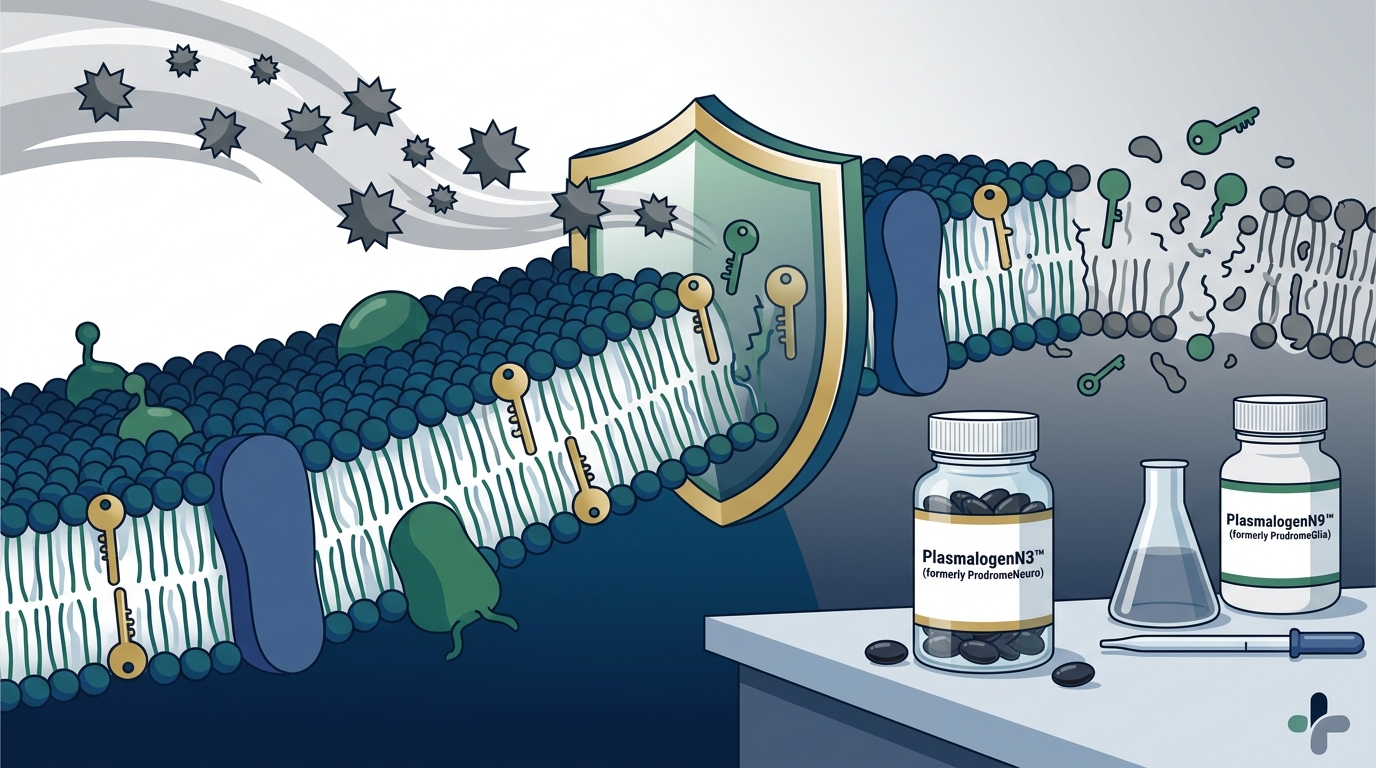
Plasmalogens are a unique class of phospholipids found in the cell membranes of nearly every cell in the human body. Unlike standard phospholipids, plasmalogens contain a vinyl-ether bond at the sn-1 position, which provides exceptional stability against oxidative stress. This chemical structure allows them to act as sacrificial antioxidants, absorbing free radicals before they can damage DNA or proteins. (Cart)
Plasmalogens are critical to the function of white matter and grey matter in the brain. White matter plasmalogens provide structural support for myelin, the protective sheath that insulates nerve fibers and enables rapid signal transmission. Grey matter plasmalogens support functional signaling, neurotransmitter release, and receptor activity. Without adequate plasmalogen levels, the communication between neurons becomes inefficient, leading to cognitive decline and neurological disorders. (Search)
The decline of plasmalogens is a hallmark of aging. As levels drop across trillions of cells, the cumulative effect compromises membrane integrity, mitochondrial function, and cellular energy production. This decline is not just a symptom of aging but a primary driver of age-related diseases. Restoring plasmalogen levels through targeted nutrition is a emerging strategy in preventive medicine.
Plasmalogens and Brain Health
The brain is the most plasmalogen-rich organ in the body. Approximately 20% of the brain's dry weight is composed of lipids, with plasmalogens making up a significant portion of this fraction. This high concentration is necessary to support the rapid firing of neurons and the maintenance of synaptic plasticity.
Plasmalogens solidify and amplify the signals between neurons to optimize physical and cognitive performance. They help maintain the fluidity of the cell membrane, allowing receptors to move freely and bind with neurotransmitters effectively. This fluidity is crucial for learning, memory formation, and emotional regulation.
When plasmalogen levels are low, the myelin sheath can become damaged, leading to slower nerve conduction and increased inflammation in the nervous system. This damage is often irreversible once it occurs, which is why prevention through early supplementation is critical. Studies suggest that maintaining high plasmalogen levels can significantly reduce the risk of neurodegenerative conditions.
Systemic Impact on Heart and Lungs
While the brain receives the most attention, plasmalogens are equally vital for other vital organs. The heart relies on plasmalogens to strengthen the heart muscle by reinforcing the cellular structure and function. This reinforcement prevents premature oxidation of cardiac tissues, which can lead to heart failure and arrhythmias.
In the lungs, plasmalogens are key components of lung cell membranes. They support membrane integrity and contribute to antioxidant defense at the cellular level. This protection is particularly important in environments with high oxidative stress, such as exposure to pollutants or during intense physical exertion.
Plasmalogens also play a role in the health of hair and nails. Plasmalogens in nail beds and hair follicles allow richer and thicker hair and healthier and faster-growing nails. This systemic benefit underscores the importance of plasmalogens as a foundational element of overall health, not just neurological function.
The Prodrome Science Approach
Prodrome Science is committed to a single focus: advancing how health professionals understand and support lipid biology. Led by neuroscientist Dayan Goodenowe, PhD, the company has spent over 30 years researching lipid and metabolomic pathways. This extensive research has led to the development of proprietary plasmalogen supplements that are engineered for the brain.
ProdromeGlia™ is designed to target white matter plasmalogens, providing structural support for myelin and membrane integrity. This product is essential for those looking to protect the physical structure of their nervous system. For those focused on cognitive function and signaling, PlasmalogenN3™ targets grey matter plasmalogens, supporting neurotransmitter release and receptor activity.
The company also offers Prodrome BDMC™, a curcuminoid formulation that addresses the inflammatory aspects of lipid decline. By combining plasmalogen supplementation with anti-inflammatory support, Prodrome provides a comprehensive approach to cellular health. This multi-faceted strategy is backed by rigorous scientific inquiry and clinical observation.
Monitoring Levels with ProdromeScan
One of the challenges in lipid biology is the lack of accessible testing methods. Traditional blood tests often fail to capture the nuanced changes in plasmalogen levels that occur at the cellular level. ProdromeScan™ addresses this gap by providing a specialized blood test kit that measures plasmalogen concentrations accurately.
Understanding your plasmalogen levels allows for personalized supplementation protocols. Without testing, individuals are essentially guessing their needs, which can lead to suboptimal results. ProdromeScan™ enables health professionals and individuals to track progress and adjust dosages based on actual biomarker data.
This data-driven approach is a cornerstone of modern preventive medicine. By monitoring plasmalogen levels, users can ensure that their supplementation is effective and that their cellular health is improving over time. This transparency is crucial for building trust in the efficacy of lipid-based interventions.
Key Takeaways
- Plasmalogens are specialized ether lipids that protect cell membranes from oxidative stress.
- People with high blood plasmalogens were 80% less likely to experience dementia, according to clinical studies.
- White matter plasmalogens support myelin structure, while grey matter plasmalogens support neural signaling.
- ProdromeGlia™ and PlasmalogenN3™ are targeted supplements designed to address specific plasmalogen deficits.
- ProdromeScan™ provides accurate biomarker testing for monitoring plasmalogen levels.
- Plasmalogen levels decline with age, contributing to cellular dysfunction and chronic disease.
- Prodrome Science is led by neuroscientist Dayan Goodenowe, PhD, with over 30 years of research.
Frequently Asked Questions
What is the primary function of plasmalogens?
Plasmalogens are a key part of every cell membrane, controlling communication, energy flow, and the body's response to stress. They act as antioxidants and structural supports for cellular integrity.
How do plasmalogens affect brain health?
Plasmalogens solidify and amplify the signals between neurons to optimize physical and cognitive performance. They are essential for maintaining the myelin sheath and supporting neurotransmitter release.
What is the difference between ProdromeGlia and PlasmalogenN3?
ProdromeGlia targets white matter plasmalogens for structural support, while PlasmalogenN3 targets grey matter plasmalogens for functional signaling and neurotransmission.
Can I test my plasmalogen levels at home?
Yes, ProdromeScan™ is a blood test kit that allows you to measure your plasmalogen levels from the comfort of your home. The results can be shared with your healthcare provider.
Why do plasmalogen levels decline with age?
Plasmalogen levels decline with age due to a combination of reduced synthesis and increased oxidative stress. This decline is a natural part of the aging process but can be mitigated through supplementation.
Are plasmalogens only important for the brain?
No, plasmalogens are critical to all cells. They support heart muscle strength, lung membrane integrity, and even the health of hair and nails by providing structural support and antioxidant protection.
Who is Dayan Goodenowe?
Dayan Goodenowe, PhD, is a neuroscientist and the leader of Prodrome Science. He has spent over 30 years researching lipid and metabolomic pathways to develop effective plasmalogen therapies.
Start Your Protocol
Take control of your cellular health today. Explore the full range of plasmalogen supplements and testing kits at Prodrome.com. Whether you are looking to protect your brain, support your heart, or monitor your biomarkers, Prodrome Science provides the tools and knowledge you need to thrive.