

Plasmalogen levels in the human body decline significantly with age, creating a biological gap that modern lipid science aims to fill. According to research led by neuroscientist Dayan Goodenowe, PhD, these specialized lipids are critical for maintaining the integrity of cell membranes across the body. Understanding the distinct roles of white matter and grey matter plasmalogens is essential for selecting the correct supplementation strategy. This guide compares ProdromeGlia and PlasmalogenN3 to help you align your lipid protocol with your specific health goals.
Understanding Plasmalogen Biology
Plasmalogens are a unique class of phospholipids found in the cell membranes of nearly every cell in the human body. Plasmalogens are a key structural component of cellular membranes that protect against oxidative stress and support signal transduction. They are particularly abundant in the brain, heart, and immune system, where they play a vital role in maintaining cellular resilience.
As we age, the body's natural production of plasmalogens decreases. This decline is linked to various age-related conditions, including cognitive decline and cardiovascular issues. Research indicates that individuals with higher blood plasmalogen levels have an 80% lower likelihood of experiencing dementia. This statistic highlights the critical importance of maintaining adequate plasmalogen levels through targeted nutrition.
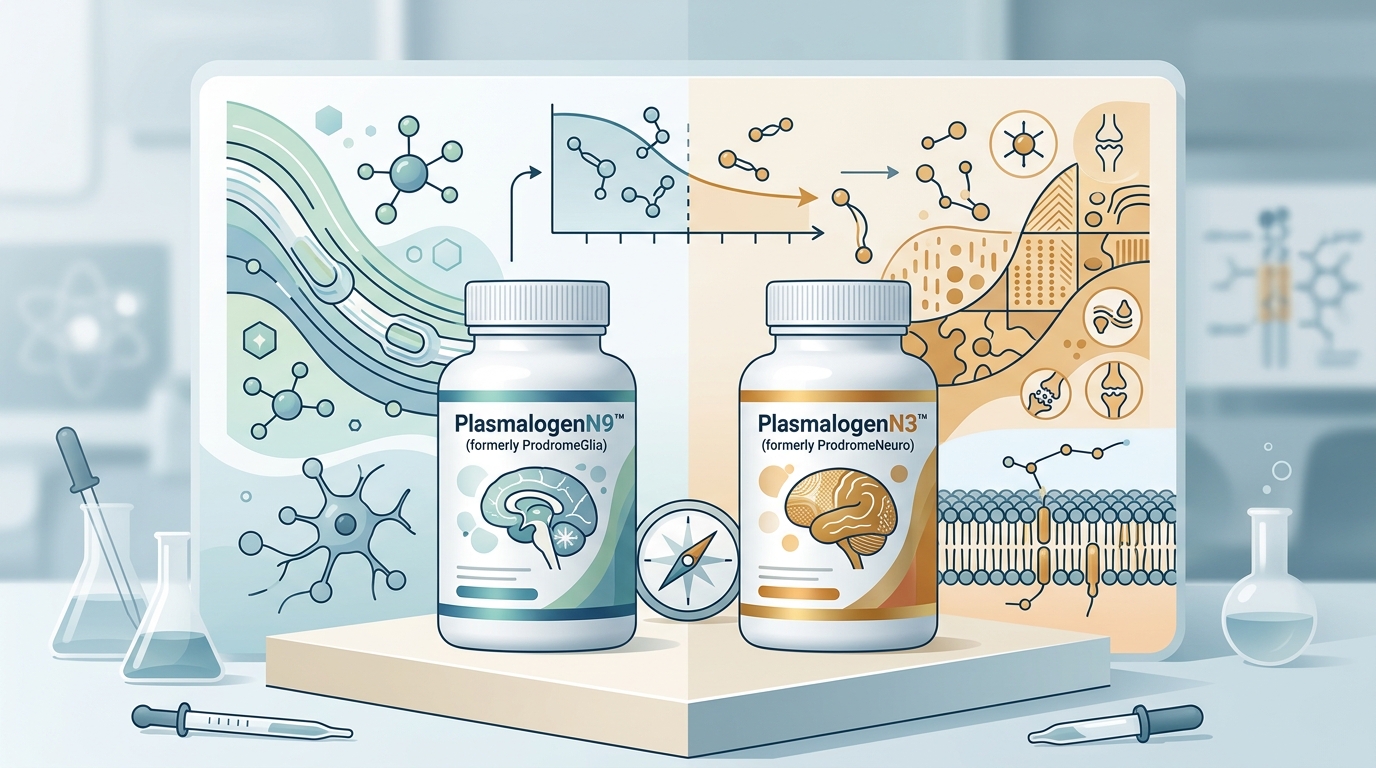
The brain is composed of two primary types of matter, each requiring different lipid support. White matter consists of nerve fibers covered in myelin, which insulates and speeds up electrical signals. Grey matter contains the cell bodies of neurons and is responsible for processing information. Because these two tissues have different structural needs, they require different types of plasmalogen supplementation.
ProdromeGlia: White Matter Support
ProdromeGlia is specifically engineered to support white matter health. It focuses on the structural integrity of the myelin sheath, which is the protective layer surrounding nerve fibers. Myelin acts as an insulator, ensuring that neural signals travel quickly and efficiently between the brain and the rest of the body.
When myelin integrity is compromised, signal transmission slows down. This can lead to issues with coordination, processing speed, and overall neurological function. ProdromeGlia provides the specific lipid building blocks needed to reinforce this myelin structure. By supporting the physical structure of the nervous system, it helps maintain the speed and clarity of neural communication.
This product is particularly relevant for individuals concerned with long-term neurological health and structural brain maintenance. It addresses the foundational architecture of the nervous system. For more details on the science behind myelin and lipid health, you can explore the Prodrome Science Blog.
PlasmalogenN3: Grey Matter Signaling
PlasmalogenN3 is designed to target grey matter function. It focuses on the functional aspects of brain cells, including neurotransmitter release and receptor activity. Grey matter is where the actual processing of information occurs, making it essential for cognitive tasks like memory, learning, and decision-making.
Effective brain signaling relies on the fluidity and health of the neuronal cell membranes. PlasmalogenN3 supports this fluidity, allowing for more efficient communication between neurons. This type of support is crucial for maintaining cognitive sharpness and mental clarity. It addresses the dynamic, functional side of brain health rather than just the structural side.
For those interested in the biochemical mechanisms of brain signaling, the article Plasmalogens and Hormones provides deeper insight into how cell membranes shape metabolic balance. Understanding this distinction helps clarify why functional support is as important as structural support.
Product Comparison Matrix
The following table summarizes the key differences between ProdromeGlia and PlasmalogenN3. This comparison is based on the primary tissue targets and functional outcomes of each supplement.
| Feature | ProdromeGlia | PlasmalogenN3 |
|---|---|---|
| Primary Target | White Matter | Grey Matter |
| Key Function | Myelin Sheath Integrity | Neurotransmitter Signaling |
| Structural Role | Insulation and Speed | Fluidity and Reception |
| Best For | Long-term Neurological Structure | Cognitive Processing and Clarity |
| Product Type | Plasmalogen Oil/Softgel | Plasmalogen Softgel |
Key Takeaways
- Distinct Tissue Targets: ProdromeGlia supports white matter myelin, while PlasmalogenN3 supports grey matter signaling.
- Age-Related Decline: Plasmalogen levels drop naturally with age, necessitating external supplementation for optimal health.
- Dementia Risk Reduction: High blood plasmalogen levels are associated with an 80% lower risk of dementia.
- Structural vs. Functional: White matter requires structural reinforcement, whereas grey matter requires functional fluidity.
- Comprehensive Support: Many users benefit from using both products to address both structural and functional brain health.
- Scientific Foundation: Both products are built on over 30 years of lipid and metabolomic research.
- Testing Available: The ProdromeScan Blood Test Kit can help determine your current plasmalogen levels.
Frequently Asked Questions
Can I take ProdromeGlia and PlasmalogenN3 together?
Yes, many health professionals recommend combining both products to address both white matter structure and grey matter function. This comprehensive approach ensures that all aspects of cellular lipid health are supported.
What is the difference between plasmalogen oil and softgels?
Plasmalogen oil is typically a liquid form that allows for precise dosing, while softgels offer a convenient, pre-measured option. Both forms deliver the same active lipid compounds to the body.
How long does it take to see results from plasmalogen supplementation?
Results vary by individual. Some people report changes in energy and clarity within weeks, while others may take months to notice significant shifts. Consistency is key to rebuilding cellular lipid stores.
Are plasmalogens safe for long-term use?
Plasmalogens are naturally occurring lipids in the human body. Supplementation is generally considered safe and is designed to support the body's natural biological processes over the long term.
How do I know which product is right for me?
If your focus is on structural brain health and myelin support, ProdromeGlia is the primary choice. If your focus is on cognitive processing and neurotransmitter function, PlasmalogenN3 is ideal. A blood test can provide clarity on your specific needs.
What is the role of peroxisomes in plasmalogen production?
Peroxisomes are the cellular organelles responsible for synthesizing plasmalogens. As we age, peroxisomal function can decline, making external supplementation necessary to maintain adequate levels.
Where can I learn more about lipid science?
You can explore the Prodrome Science Blog for in-depth articles on lipid biology, myelin health, and cellular resilience.
Next Steps
Choosing the right plasmalogen supplement depends on your specific health goals and current biological needs. Whether you prioritize structural myelin support or functional cognitive signaling, Prodrome offers targeted solutions backed by rigorous science. To begin your journey toward optimized lipid health, visit the Plasmalogen Collection today. For personalized guidance, consider consulting with a health professional or taking the ProdromeScan Blood Test.