

Targeted Membrane Phospholipids and Neurodegenerative Health: The 2026 Guide
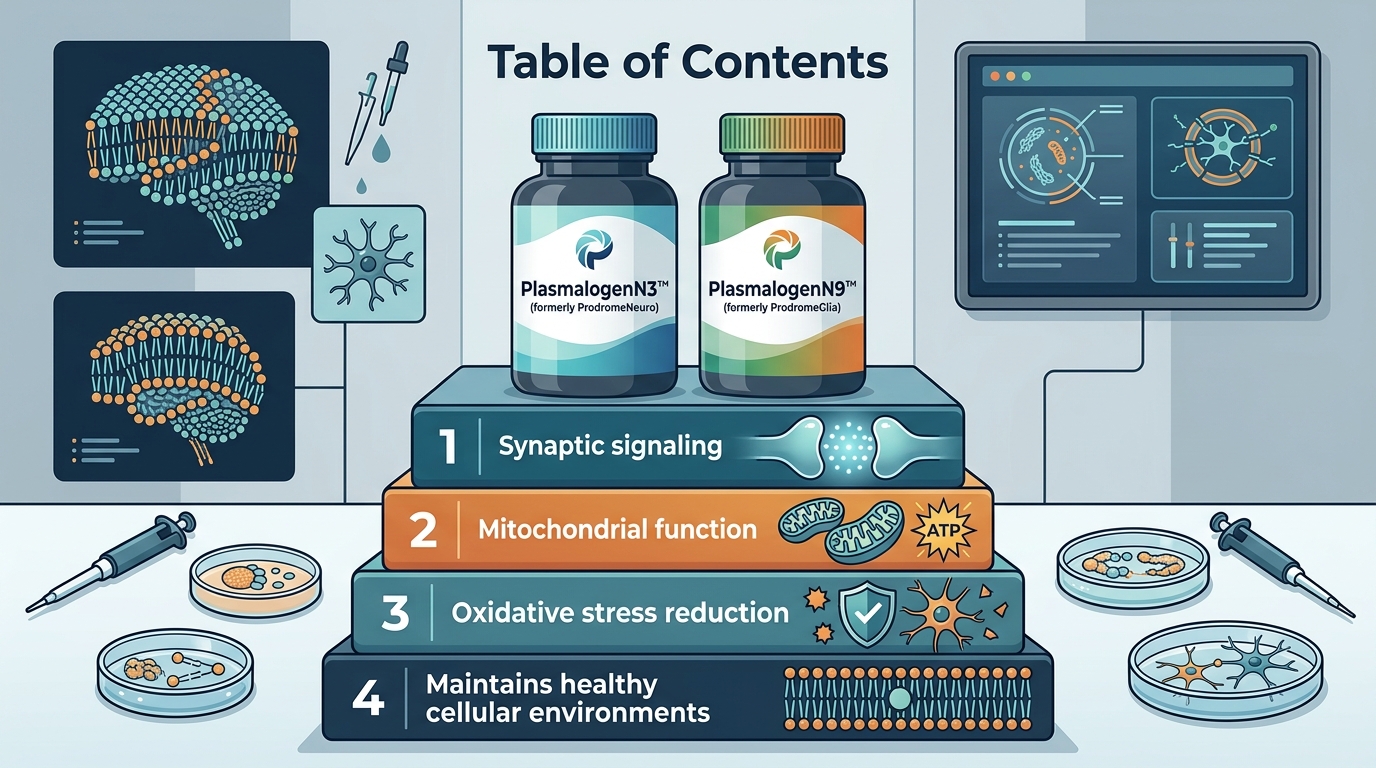
Targeted membrane phospholipids support neurodegenerative health by maintaining the structural integrity and fluidity of cell membranes, which are essential for efficient neural communication and cellular resilience. This guide explores how specific lipid classes, particularly plasmalogens, influence synaptic signaling, mitochondrial function, and oxidative stress reduction. We examine the biochemical mechanisms that drive these effects and how targeted nutritional support can help maintain healthy cellular environments in the brain.
Phospholipid Homeostasis
Phospholipid homeostasis is the biological process by which cells maintain the balance of lipid composition within their membranes. This balance is critical because the physical properties of the membrane, such as fluidity and permeability, directly influence cellular function. In the brain, where metabolic demand is exceptionally high, maintaining this equilibrium is vital for long-term cellular health.
Cells actively regulate their phospholipid profiles through synthesis, degradation, and transport mechanisms. When this homeostasis is disrupted, membranes can become rigid or unstable, potentially impairing the function of embedded proteins. Prodrome Science focuses on supporting this balance through targeted nutritional approaches that provide the building blocks necessary for healthy membrane maintenance.
The Role of Lipid Turnover
Lipid turnover refers to the continuous replacement of membrane components. In neural tissues, this process is slower than in other tissues, making the initial quality of lipid incorporation particularly important. By supporting the availability of high-quality phospholipid precursors, individuals can help ensure that new membrane components are structurally sound and functional.
Synaptic Signaling
Synaptic signaling is the process by which neurons communicate with each other through the release and reception of chemical messengers. The efficiency of this communication depends heavily on the physical state of the synaptic membrane. Plasmalogens, a specialized class of phospholipids, are highly concentrated in neuronal membranes and play a key role in supporting this signaling process.
Research indicates that plasmalogens contribute to the structural flexibility required for efficient neurotransmitter release and receptor binding. By helping maintain the integrity of the synaptic membrane, targeted phospholipids may support the clarity and speed of neural communication. This is particularly relevant in the context of neurodegeneration, where membrane integrity is often compromised.
Gray Matter and Synaptic Density
Gray matter, which contains the cell bodies of neurons, is rich in DHA-type plasmalogens. These lipids are associated with the dynamic properties of the membrane that facilitate rapid signal processing. Supporting the lipid environment in gray matter may help maintain the functional capacity of neural networks involved in cognition and memory.
Mitochondrial Function
Mitochondrial function is the process by which cells generate energy in the form of ATP. Mitochondria are surrounded by two membranes, and the inner membrane is particularly rich in plasmalogens. These lipids are thought to protect mitochondria from oxidative damage and support the efficiency of the electron transport chain.
Healthy mitochondrial function is essential for brain health, as neurons require a constant and reliable supply of energy. By supporting the lipid composition of mitochondrial membranes, targeted phospholipids may help maintain cellular energy production. This is a key aspect of supporting overall neurodegenerative health, as energy deficits can contribute to cellular stress.
The Vinyl Ether Bond
The unique vinyl ether bond in plasmalogens gives them strong antioxidant properties. This bond can neutralize free radicals before they cause significant damage to the mitochondrial membrane. This protective mechanism helps preserve the structural integrity of the mitochondria, supporting their ability to generate energy efficiently.
Neuroinflammation
Neuroinflammation is the immune response within the central nervous system, involving the activation of glial cells. While inflammation is a normal part of tissue repair, chronic neuroinflammation is associated with neurodegeneration. Plasmalogens have been shown to influence the activity of microglia, the primary immune cells of the brain.
By modulating the inflammatory response, plasmalogens may help maintain a balanced immune environment in the brain. This can support the protective functions of glial cells while potentially reducing the harmful effects of excessive inflammation. Prodrome Science emphasizes the importance of this balance in its approach to brain health.
Microglial Activation
Plasmalogens
Plasmalogens are a unique class of ether phospholipids that are highly concentrated in the brain and other tissues with high metabolic demand. They are distinct from other phospholipids due to their vinyl ether bond, which provides them with unique biophysical and antioxidant properties. Plasmalogens are essential components of cell membranes, particularly in neural tissues.
Plasmalogen levels naturally decline with age, and this decline is associated with various aspects of neurodegeneration. Prodrome Science has developed targeted plasmalogen precursors, such as PlasmalogenN3™ (formerly ProdromeNeuro) and PlasmalogenN9™ (formerly ProdromeGlia), to help support the body's ability to maintain healthy plasmalogen levels. These supplements are designed to provide the specific lipid precursors needed for the synthesis of plasmalogens in different brain regions.
Omega-3 and Omega-9 Plasmalogens
There are two primary types of plasmalogens in the brain: DHA-type (omega-3) and oleic-based (omega-9). DHA-type plasmalogens are concentrated in gray matter and are associated with synaptic function, while oleic-based plasmalogens are found in white matter and support myelin integrity. By providing both types of precursors, Prodrome Science offers a comprehensive approach to supporting the lipid environment of the entire brain.
Membrane Phospholipids
Membrane phospholipids are the primary structural components of cell membranes. They form a bilayer that separates the inside of the cell from the outside environment. The specific composition of these phospholipids determines the physical properties of the membrane, including its fluidity, permeability, and ability to host functional proteins.
In the brain, the composition of membrane phospholipids is highly specialized. Different regions of the brain have different lipid profiles, reflecting their specific functional needs. By supporting the availability of the right types of phospholipids, targeted nutritional interventions can help maintain the specialized lipid environments required for optimal brain function.
Phosphatidylcholine and Plasmalogens
Phosphatidylcholine (PC) is a major phospholipid in cell membranes and is a precursor for the synthesis of plasmalogens. The source of PC can influence its effectiveness in supporting brain health. Egg yolk-derived PC, for example, is biochemically identical to human PC and may be more readily incorporated into brain membranes than plant-based sources. Prodrome Science offers products that combine PC with plasmalogen precursors to maximize their synergistic effects.
Lipid Raft Function
Lipid raft function refers to the role of specialized microdomains in the cell membrane that are enriched in cholesterol and sphingolipids. These rafts serve as platforms for signal transduction and protein sorting. Plasmalogens are thought to interact with lipid rafts, influencing their stability and function.
By supporting the integrity of lipid rafts, targeted phospholipids may help maintain the efficiency of cellular signaling pathways. This is particularly important in neurons, where precise signal transduction is essential for proper function. Disruption of lipid raft integrity has been associated with various aspects of neurodegeneration, making it a key target for supportive interventions.
Cholesterol and Plasmalogen Interactions
Cholesterol and plasmalogens have a complex relationship within the membrane. Cholesterol helps to modulate membrane fluidity, while plasmalogens contribute to membrane stability and antioxidant defense. The balance between these two lipids is crucial for maintaining the proper function of lipid rafts. Supporting this balance may help preserve the structural and functional integrity of the cell membrane.
Oxidative Stress Reduction
Oxidative stress reduction is the process of neutralizing free radicals and preventing oxidative damage to cellular components. The brain is particularly vulnerable to oxidative stress due to its high oxygen consumption and lipid content. Plasmalogens are potent antioxidants, thanks to their vinyl ether bond, which can scavenge free radicals and protect the membrane from peroxidation.
The Antioxidant Capacity of Plasmalogens
The antioxidant capacity of plasmalogens is significantly higher than that of other phospholipids. This is due to the unique chemical structure of the vinyl ether bond, which can react with free radicals to form stable products. This protective mechanism helps to preserve the integrity of the cell membrane and prevent the propagation of oxidative damage. By supporting the body's natural antioxidant defenses, targeted phospholipids can help maintain a healthy cellular environment.
Key Takeaways
- Phospholipid homeostasis is essential for maintaining the structural integrity and fluidity of cell membranes, which is critical for neural function.
- Plasmalogens are highly concentrated in the brain and play a key role in supporting synaptic signaling and mitochondrial function.
- The vinyl ether bond in plasmalogens provides strong antioxidant properties, helping to protect cells from oxidative stress.
- Plasmalogens influence neuroinflammation by modulating the activity of microglia, helping to maintain a balanced immune response in the brain.
- DHA-type plasmalogens are concentrated in gray matter and support synaptic function, while oleic-based plasmalogens are found in white matter and support myelin integrity.
- Targeted phospholipid precursors, such as those offered by Prodrome Science, can help support the body's ability to maintain healthy plasmalogen levels.
- Lipid rafts are specialized microdomains in the cell membrane that are influenced by plasmalogens and are important for signal transduction.
- Supporting the lipid environment of the brain is a key strategy for promoting neurodegenerative health and maintaining cellular resilience.
Frequently Asked Questions
What are plasmalogens and why are they important for brain health?
Plasmalogens are a unique class of ether phospholipids that are highly concentrated in the brain. They are important for brain health because they support the structural integrity of cell membranes, facilitate synaptic signaling, and provide antioxidant protection. Their presence is essential for maintaining the function of neural tissues.
How do targeted membrane phospholipids support neurodegenerative health?
Targeted membrane phospholipids support neurodegenerative health by maintaining the structural integrity and fluidity of cell membranes. This helps ensure efficient neural communication, supports mitochondrial function, and reduces oxidative stress. By providing the specific lipid precursors needed for the synthesis of plasmalogens, these interventions can help maintain a healthy cellular environment in the brain.
What is the difference between DHA-type and oleic-based plasmalogens?
DHA-type plasmalogens are concentrated in gray matter and are associated with synaptic function, while oleic-based plasmalogens are found in white matter and support myelin integrity. Both types are essential for different aspects of brain function, and supporting both can provide a comprehensive approach to maintaining brain health.
Can plasmalogen supplements treat neurodegenerative diseases?
No, plasmalogen supplements are not intended to treat, cure, or prevent any disease. They are dietary supplements designed to support the body's natural ability to maintain healthy plasmalogen levels. These statements have not been evaluated by the Food and Drug Administration. This product is not intended to diagnose, treat, cure, or prevent any disease.
How does Prodrome Science support plasmalogen levels?
Prodrome Science offers targeted plasmalogen precursors, such as PlasmalogenN3™ (formerly ProdromeNeuro) and PlasmalogenN9™ (formerly ProdromeGlia), which are designed to provide the specific lipid precursors needed for the synthesis of plasmalogens in different brain regions. These products are manufactured in the USA in facilities that follow Good Manufacturing Practice (GMP) standards for safety and purity.
What is the role of phosphatidylcholine in brain health?
Phosphatidylcholine (PC) is a major phospholipid in cell membranes and is a precursor for the synthesis of plasmalogens. It is essential for the structure and function of cell membranes and plays a key role in supporting brain health. The source of PC can influence its effectiveness, with egg yolk-derived PC being biochemically identical to human PC.
How can I learn more about plasmalogen science?
You can learn more about plasmalogen science by exploring the resources available on the Prodrome Science website, including their blog and publications. You can also consider joining the Elite Practitioner Program, which offers advanced training in lipid-based restorative health for health professionals.