

Targeted Membrane Phospholipids and Neurodegenerative Health: A 2026 Guide
Targeted membrane phospholipids support neurodegenerative health by maintaining the structural integrity and fluidity of neuronal cell membranes. This foundation allows for efficient synaptic signaling, mitochondrial energy production, and reduced oxidative stress. Prodrome Science provides a comprehensive framework for understanding how these specialized lipids influence cellular resilience. This guide covers phospholipid homeostasis, synaptic signaling, mitochondrial function, neuroinflammation, and the specific role of plasmalogens.
Phospholipid Homeostasis
Phospholipid homeostasis is the biological process that maintains the balance of lipid composition within cell membranes. This equilibrium is critical for cellular survival, particularly in high-energy tissues like the brain. Membranes are dynamic structures that require constant turnover and repair to function correctly.
As individuals age, the natural production of certain phospholipids may decline. This shift can alter membrane fluidity and permeability. Prodrome Science emphasizes that maintaining optimal lipid profiles is a cornerstone of cellular health. By supporting the body's natural lipid synthesis pathways, targeted nutrition helps preserve membrane stability.
The Role of Lipid Turnover
Cell membranes undergo continuous remodeling. Enzymes break down old phospholipids and synthesize new ones to replace them. This turnover ensures that the membrane remains responsive to external signals. Disruptions in this cycle can lead to increased oxidative vulnerability.
Structural Integrity and Fluidity
Membrane fluidity is determined by the ratio of saturated to unsaturated fatty acids. Plasmalogens, a specific class of ether phospholipids, contribute significantly to this fluidity. They help maintain the proper spacing between membrane proteins, which is essential for their function.
Synaptic Signaling
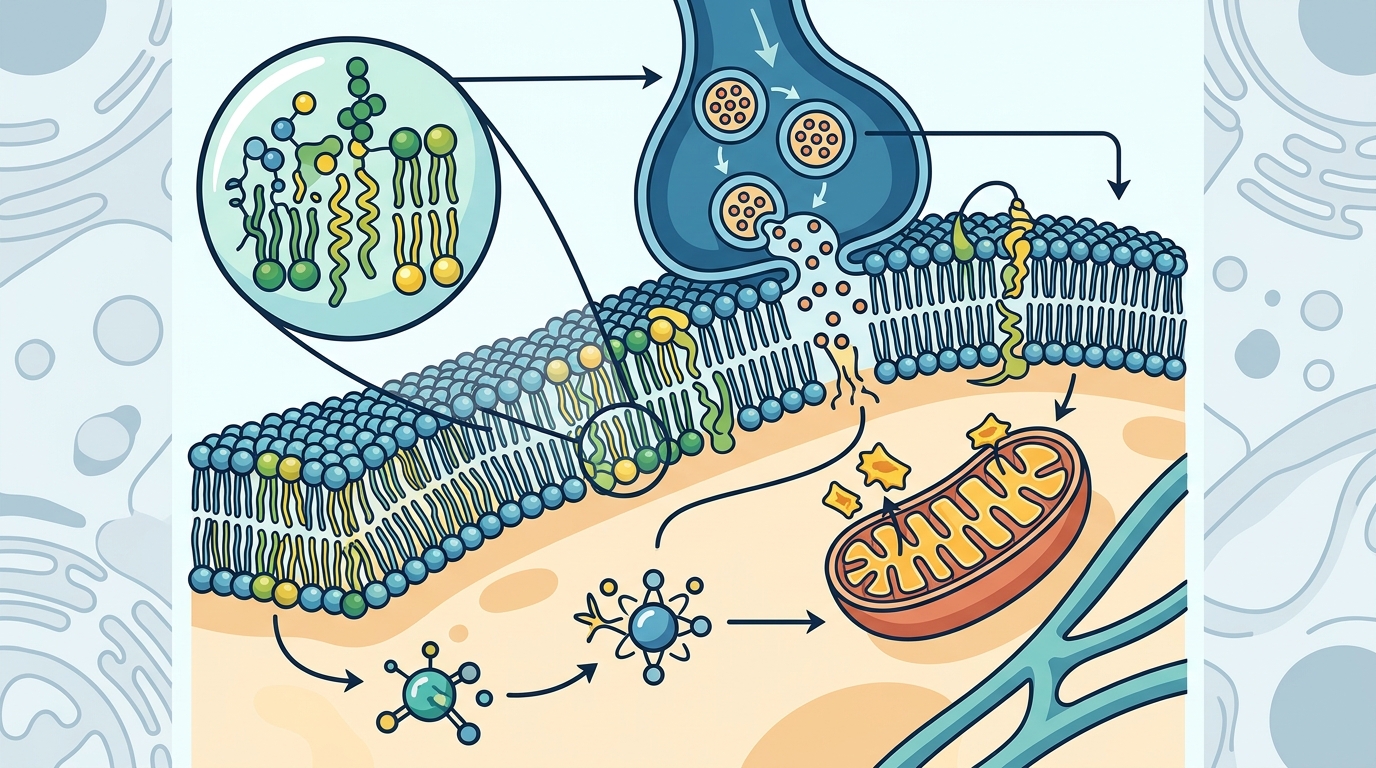
Synaptic signaling is the process by which neurons communicate with each other through the release and reception of neurotransmitters. The efficiency of this communication depends heavily on the physical properties of the neuronal membrane. Plasmalogens are highly concentrated in the gray matter of the brain, where synapses are most abundant.
Research indicates that plasmalogens support the structural flexibility required for neurotransmitter release. They help maintain the integrity of synaptic vesicles, ensuring that signals are transmitted accurately. This structural support is vital for cognitive processes such as memory and learning.
Gray Matter Enrichment
Gray matter contains the cell bodies of neurons and is the primary site of information processing. DHA-type plasmalogens are particularly enriched in this region. Their presence supports the dynamic nature of neuronal membranes, allowing for rapid signal transduction.
Signal Transmission Efficiency
Efficient signal transmission requires a stable yet flexible membrane environment. Plasmalogens help buffer oxidative stress that can otherwise damage synaptic structures. By protecting these critical junctions, targeted phospholipids contribute to sustained neural communication.
Mitochondrial Function
Mitochondrial function is the process by which cells generate energy in the form of adenosine triphosphate (ATP). Neurons are energy-intensive cells that rely heavily on mitochondrial efficiency. Plasmalogens are found in high concentrations in mitochondrial membranes, where they play a protective role.
The unique vinyl ether bond in plasmalogens provides antioxidant capacity. This bond helps neutralize reactive oxygen species (ROS) generated during energy production. By mitigating oxidative damage, plasmalogens support the long-term integrity of mitochondrial membranes.
Protection Against Oxidative Stress
Mitochondria are a primary source of ROS within the cell. While ROS are necessary for signaling, excessive levels can damage cellular components. Plasmalogens act as a first line of defense, protecting the inner mitochondrial membrane from oxidative degradation.
Energy Metabolism Support
Healthy mitochondria are essential for maintaining cellular energy levels. By supporting mitochondrial membrane integrity, targeted phospholipids help ensure efficient energy production. This is particularly important in the brain, where energy demands are constant and high.
Neuroinflammation
Neuroinflammation is the immune response within the central nervous system, involving the activation of glial cells. While acute inflammation is a protective mechanism, chronic neuroinflammation can contribute to cellular stress. Plasmalogens have been shown to influence inflammatory pathways in neural tissues.
Studies suggest that plasmalogens help modulate the activation of microglia, the primary immune cells of the brain. By suppressing excessive pro-inflammatory cytokine production, plasmalogens may help maintain a balanced inflammatory environment. This balance is crucial for preserving neural tissue integrity.
Modulation of Microglial Activity
Microglia play a dual role in brain health. They can be protective or harmful depending on their activation state. Plasmalogens help regulate this activation, preventing the transition from a protective to a destructive phenotype. This regulation supports a healthier neural microenvironment.
Cytokine Regulation
Pro-inflammatory cytokines such as IL-1β and TNF-α are key mediators of neuroinflammation. Plasmalogens help lower the levels of these cytokines in neural membranes. This reduction in inflammatory signaling contributes to overall cellular resilience.
Plasmalogens
Plasmalogens are a unique class of ether phospholipids that are essential components of cell membranes. They are distinct from ester phospholipids due to the presence of a vinyl ether bond. This structural difference gives plasmalogens unique biophysical and antioxidant properties.
Prodrome Science focuses on providing targeted plasmalogen precursors to support cellular health. Our products, PlasmalogenN3™ (formerly ProdromeNeuro) and PlasmalogenN9™ (formerly ProdromeGlia), are designed to support different aspects of brain health. PlasmalogenN3™ targets gray matter, while PlasmalogenN9™ supports white matter and myelin integrity.
Gray Matter vs. White Matter
The brain is not uniform in its lipid composition. Gray matter relies on DHA-type plasmalogens for synaptic function, while white matter depends on oleic-based plasmalogens for myelin structure. Understanding this distinction is key to targeted nutritional support.
Targeted Precursors
Prodrome Science offers high-potency plasmalogen precursors that are bioidentical to naturally occurring lipids. These precursors are manufactured in the USA in facilities that follow Good Manufacturing Practice (GMP) standards. They are available in both oil and softgel forms to suit individual preferences.
| Product | Primary Target | Fatty Acid Type | Key Function |
|---|---|---|---|
| PlasmalogenN3™ | Gray Matter | Omega-3 (DHA) | Synaptic signaling and cognitive support |
| PlasmalogenN9™ | White Matter | Omega-9 (Oleic) | Myelin integrity and signal transmission |
Key Takeaways
- Phospholipid homeostasis is essential for maintaining membrane fluidity and structural integrity.
- Plasmalogens are highly concentrated in the brain, particularly in gray and white matter.
- Targeted phospholipids support synaptic signaling by maintaining membrane flexibility.
- Mitochondrial function is protected by the antioxidant properties of plasmalogens.
- Plasmalogens help modulate neuroinflammation by regulating microglial activity.
- Prodrome Science offers targeted precursors for both gray and white matter support.
- Blood plasmalogen levels can be measured using the ProdromeScan™ test to assess health deviations.
- Conservative structure/function claims are used to ensure compliance with FDA regulations.
Frequently Asked Questions
What are plasmalogens?
Plasmalogens are a specialized class of ether phospholipids found in cell membranes. They are characterized by a vinyl ether bond that provides antioxidant and structural benefits.
How do plasmalogens support brain health?
Plasmalogens support brain health by maintaining the integrity of neuronal membranes. They facilitate efficient synaptic signaling and protect against oxidative stress.
What is the difference between PlasmalogenN3™ and PlasmalogenN9™?
PlasmalogenN3™ is an omega-3 precursor that targets gray matter, while PlasmalogenN9™ is an omega-9 precursor that targets white matter. Each supports different aspects of neural function.
Can plasmalogens treat neurodegenerative diseases?
No. Plasmalogens are dietary supplements and are not intended to diagnose, treat, cure, or prevent any disease. They support general cellular health and membrane integrity.
How is the ProdromeScan™ test used?
The ProdromeScan™ test measures key biomarkers, including plasmalogen levels, to assess deviations from health. It is not a diagnostic tool but a measure of biochemical health.
Where can I purchase Prodrome products?
Prodrome products are available on our website and on Amazon. We recommend purchasing from authorized sources to ensure authenticity.
Are Prodrome products safe?
Prodrome products are manufactured in the USA in GMP-certified facilities. They are generally well-tolerated, but you should consult your healthcare provider before starting any new supplement.
Conclusion
Targeted membrane phospholipids play a critical role in supporting neurodegenerative health by maintaining cellular integrity and function. Prodrome Science provides evidence-based tools and supplements to help individuals and health professionals understand and support lipid biology. By focusing on phospholipid homeostasis, synaptic signaling, mitochondrial function, and neuroinflammation, we offer a comprehensive approach to cellular health. To explore our products and learn more about the science behind plasmalogens, visit About Us or contact our team at . These statements have not been evaluated by the Food and Drug Administration. This product is not intended to diagnose, treat, cure, or prevent any disease.