

Step-by-Step Guide to Building a Brain-Health Routine for Cognitive Support
Recent lipid science research indicates that cellular membrane integrity is the primary driver of cognitive longevity. According to a 2026 analysis of plasmalogen levels, people with high blood plasmalogens were 80% less likely to experience dementia. This statistic underscores a critical shift in neurology: brain health is not just about neurotransmitters, but about the structural foundation of every cell in your body. Building a routine that supports this foundation requires a systematic approach to lipid biology, targeted nutrition, and continuous biomarker monitoring.
Understanding Lipid Biology and Membrane Integrity
To build an effective brain-health routine, you must first understand the cellular mechanism of aging. Plasmalogens are a specific type of phospholipid that serves as a key component of cell membranes. Plasmalogens are the building blocks of healthy cells, including building and strengthening the myelin sheath in neuronal cells. Without adequate plasmalogens, the myelin sheath that insulates nerve fibers degrades, leading to slower signal transmission and cognitive decline.
White matter plasmalogens provide structural support for myelin and membrane integrity. Grey matter plasmalogens offer functional support for signaling and neurotransmission. Both are essential, but they serve different roles in cognitive performance. As we age, our body's natural production of these lipids declines. This decline is not merely a symptom of aging; it is a cause of the functional loss we observe in memory, focus, and processing speed.
Prodrome Science has spent over 30 years researching lipid biology to address this decline. Their work focuses on advancing how health professionals understand and support lipid biology, starting at the membrane. By targeting the root cause, rather than just managing symptoms, you can create a routine that sustains cognitive vitality for decades.
Step 1: Establish a Biomarker Baseline
You cannot optimize what you do not measure. The first step in building a brain-health routine is to establish a clear baseline of your current lipid status. Standard blood work often misses critical lipid markers because they are not part of the routine cholesterol panel. You need specialized testing to see the full picture of your cellular health.
The ProdromeScan™ is a blood test kit designed to measure plasmalogen levels and other critical lipid biomarkers. This test provides a snapshot of your current membrane health, allowing you to identify gaps in your lipid profile. Without this data, any supplementation strategy is essentially a guess. By using a validated tool like the ProdromeScan™, you gain the clarity needed to tailor your routine to your specific biological needs.
Consider the difference between the ProdromeScan™ and the BioMetrix™ BioScan. Understanding these distinctions helps you choose the right tool for your initial assessment. A precise baseline ensures that your subsequent steps are targeted and effective, avoiding the common pitfall of generic supplementation that fails to address individual lipid deficits.
Step 2: Implement Targeted Plasmalogen Nutrition
Once you have your baseline, the next step is to replenish your plasmalogen levels through targeted nutrition. Because plasmalogens are rare in the standard diet, supplementation is often necessary to achieve therapeutic levels. However, not all supplements are created equal. The quality and source of the plasmalogens matter significantly for absorption and efficacy.
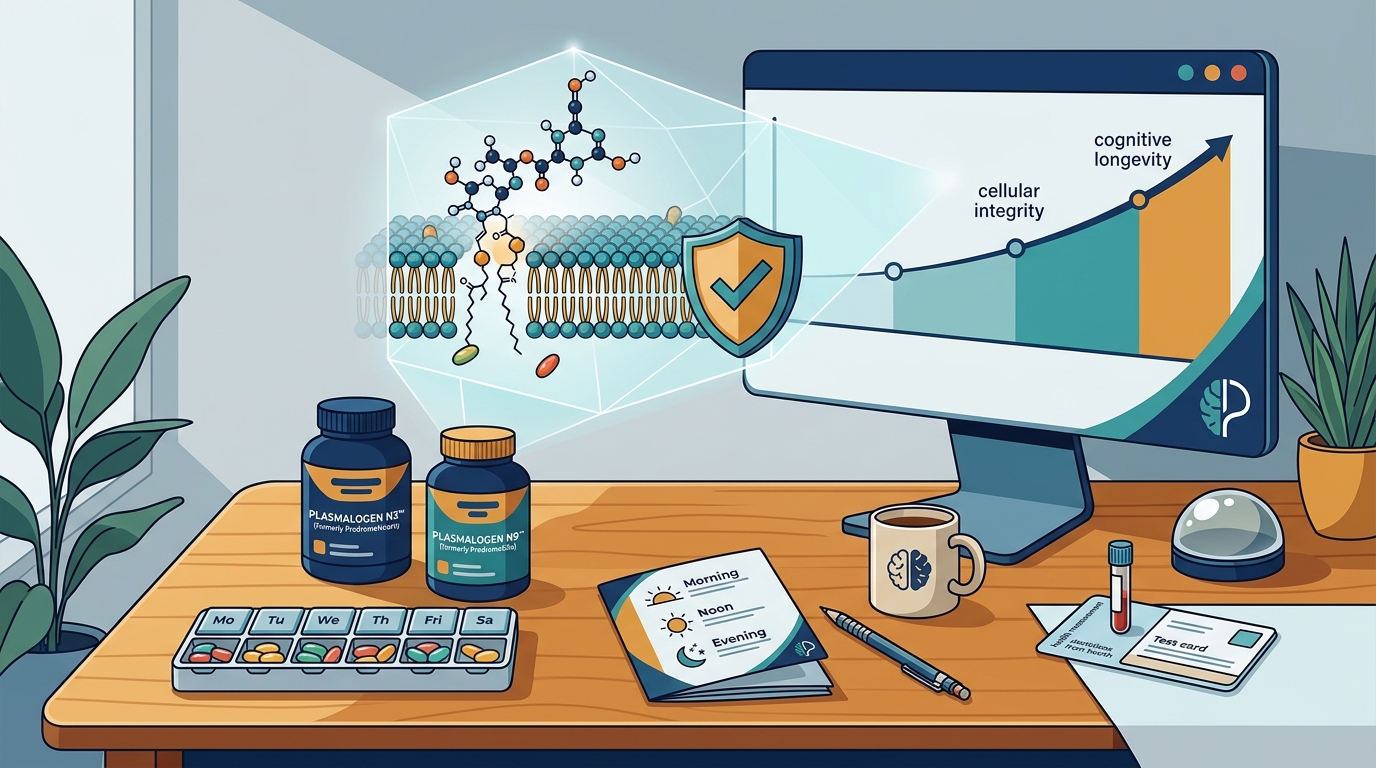
Prodrome offers a range of specialized lipid supplements designed to support different aspects of brain health. For example, ProdromeGlia™ focuses on white matter plasmalogens to support myelin structure. In contrast, PlasmalogenN3™ targets grey matter plasmalogens to support neurotransmission and signaling. Choosing the right product depends on your specific biomarker results and cognitive goals.
Another critical component is Prodrome BDMC™, a curcuminoid formulation that supports the body's natural defense mechanisms. Curcumin is well-known for its anti-inflammatory properties, but BDMC is engineered to enhance bioavailability and stability. Integrating these specialized lipids into your daily routine creates a robust foundation for cellular resilience. Consistency is key; lipid membranes take time to rebuild and stabilize, so daily adherence to your protocol is essential for long-term results.
Step 3: Manage Oxidative Stress and Inflammation
Plasmalogens act as an antioxidant free radical that acts as the body's first line of defense against oxidation, disease and aging. They protect cell membranes from lipid peroxidation, a process that damages the structural integrity of the membrane. When plasmalogen levels are low, cells become more vulnerable to oxidative stress, which accelerates aging and cognitive decline.
To support your brain-health routine, you must also address the sources of oxidative stress in your environment. This includes managing chronic inflammation, reducing exposure to toxins, and supporting your body's natural antioxidant systems. The Three Pillars of Oxidative Balance: MDA, Catalase, and SOD are critical markers to monitor. MDA (malondialdehyde) indicates lipid peroxidation, while Catalase and SOD (superoxide dismutase) are enzymes that neutralize free radicals.
By combining plasmalogen supplementation with lifestyle changes that reduce oxidative load, you create a synergistic effect. Your cells are better equipped to handle stress, and the plasmalogens you consume are preserved rather than being used up as sacrificial antioxidants. This approach aligns with the principles of systems biology, where the body is viewed as an interconnected network rather than a collection of isolated symptoms.
Step 4: Engage Professional Clinical Guidance
Building a brain-health routine is not a one-size-fits-all endeavor. The complexity of lipid biology requires professional oversight to ensure safety and efficacy. Health professionals play a crucial role in interpreting biomarker data and prescribing appropriate lipid protocols. By partnering with a qualified practitioner, you can navigate the nuances of lipid supplementation with confidence.
Prodrome offers a Prodrome Professionals program designed to educate and support health practitioners. This program provides access to advanced biomarker technologies, clinical tools, and targeted nutrition protocols. If you are a health professional, consider becoming a Prodrome Professional to stay at the forefront of lipid science. For patients, finding a practitioner who understands lipid biology is essential for personalized care.
Professional guidance also helps in avoiding common pitfalls, such as over-supplementation or ignoring underlying metabolic issues. A trained practitioner can help you adjust your protocol based on your body's response, ensuring that you are on the most effective path to cognitive support. This collaborative approach maximizes the benefits of your brain-health routine and minimizes the risk of adverse effects.
Step 5: Monitor and Adjust Your Protocol
The final step in building a brain-health routine is continuous monitoring and adjustment. Lipid biology is dynamic, and your needs will change over time. Regular follow-up testing is necessary to track your progress and make informed adjustments to your protocol. This iterative process ensures that your routine remains effective as your body ages and your environment changes.
Track your cognitive performance, energy levels, and overall well-being alongside your biomarker data. This holistic view helps you understand the real-world impact of your lipid protocol. If your plasmalogen levels are rising but cognitive symptoms persist, it may indicate a need for additional support, such as addressing gut health or hormonal balance. The Plasmalogens and Hormones: How Cell Membranes Shape Hormone Signaling article explores this connection in depth.
Adjustments should be made gradually and under professional guidance. Sudden changes can disrupt your body's equilibrium. By staying consistent with your testing and working closely with your practitioner, you can fine-tune your routine to achieve optimal cognitive health. This proactive approach empowers you to take control of your brain health and age with vitality.
Key Takeaways
- Plasmalogens are critical for myelin integrity: White matter plasmalogens support the structure of myelin, which is essential for fast nerve signaling.
- Biomarker testing is non-negotiable: Use tools like the ProdromeScan™ to establish a baseline before starting any supplementation protocol.
- Targeted nutrition matters: Different plasmalogen products, such as ProdromeGlia™ and PlasmalogenN3™, serve different cognitive functions.
- Oxidative stress accelerates decline: Plasmalogens act as antioxidants, protecting cells from lipid peroxidation and aging.
- Professional guidance is essential: Partner with a health professional who understands lipid biology for personalized care.
- Consistency drives results: Lipid membranes take time to rebuild; daily adherence to your protocol is crucial.
- Continuous monitoring is key: Regular follow-up testing ensures your protocol remains effective as your needs change.
Frequently Asked Questions
What are plasmalogens and why are they important for brain health?
Plasmalogens are a specific type of phospholipid that serves as a key component of cell membranes. They are vital for maintaining membrane integrity, supporting myelin structure, and protecting cells from oxidative stress. Without adequate plasmalogens, cognitive function can decline due to impaired nerve signaling and cellular damage.
How does the ProdromeScan™ test work?
The ProdromeScan™ is a specialized blood test that measures plasmalogen levels and other critical lipid biomarkers. It provides a detailed snapshot of your current membrane health, allowing you to identify gaps in your lipid profile and tailor your supplementation strategy accordingly.
What is the difference between ProdromeGlia™ and PlasmalogenN3™?
ProdromeGlia™ focuses on white matter plasmalogens to support myelin structure and membrane integrity. PlasmalogenN3™ targets grey matter plasmalogens to support neurotransmission and signaling. The choice between them depends on your specific biomarker results and cognitive goals.
Can I build a brain-health routine without professional guidance?
While you can start with general lipid education, professional guidance is highly recommended. A health professional can interpret your biomarker data, prescribe appropriate lipid protocols, and help you navigate the complexities of lipid biology for optimal results.
How long does it take to see results from plasmalogen supplementation?
Results vary by individual, but lipid membranes take time to rebuild and stabilize. Most people begin to notice subtle changes in energy and cognitive clarity within a few months. Consistent daily supplementation and regular monitoring are key to achieving long-term benefits.
What role does oxidative stress play in cognitive decline?
Oxidative stress damages cell membranes through lipid peroxidation. Plasmalogens act as antioxidants to protect against this damage. When plasmalogen levels are low, cells become more vulnerable to oxidative stress, accelerating aging and cognitive decline.
Where can I find more information on lipid science?
Prodrome Science offers a comprehensive Science Blog with articles on lipid biology, plasmalogens, and cognitive health. You can also explore their Articles & Publications for in-depth research and clinical insights.
Start Your Cognitive Health Journey
Building a brain-health routine is an investment in your future cognitive vitality. By understanding lipid biology, establishing a biomarker baseline, and implementing targeted nutrition, you can protect your brain health against the effects of aging. Start by scheduling your ProdromeScan™ today and take the first step toward a healthier, sharper mind. For more information on our products and science, visit our Science Blog or contact us to speak with a lipid specialist.