

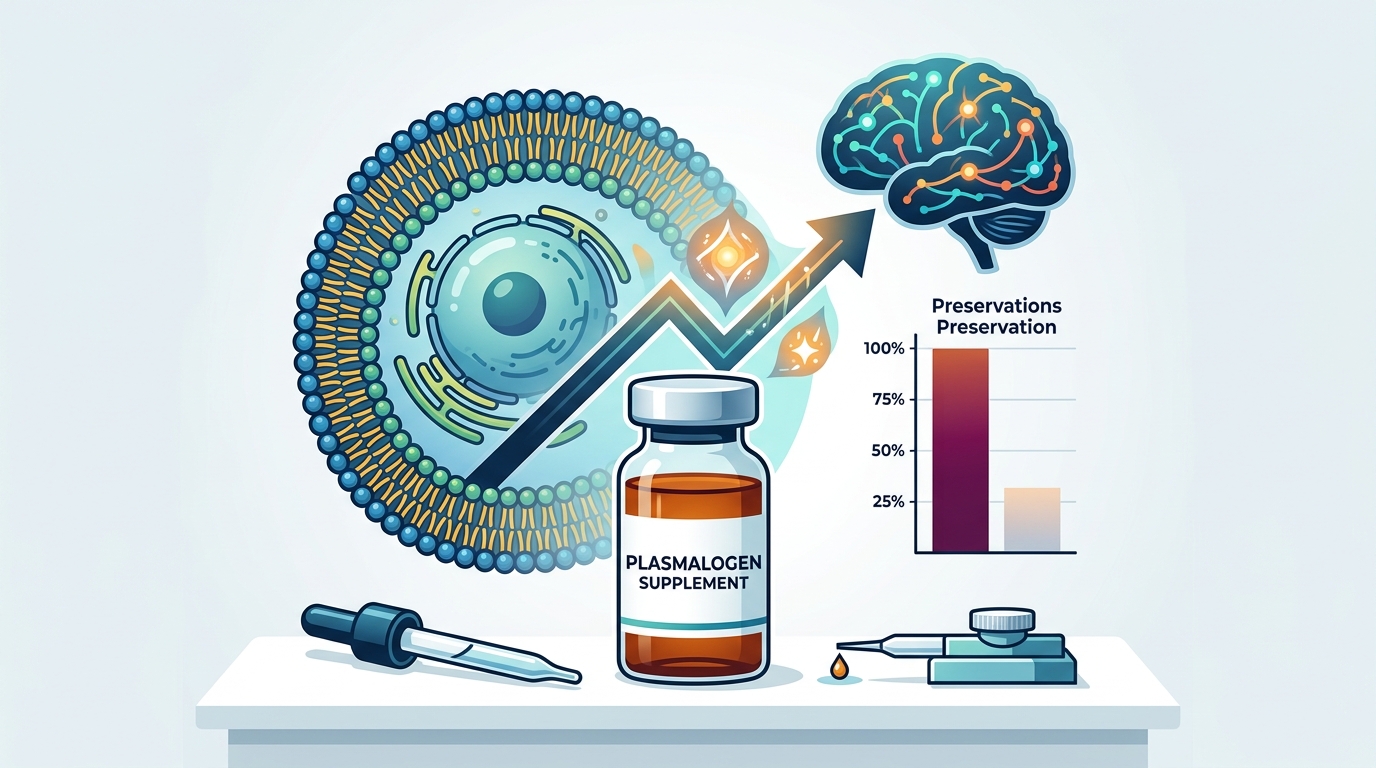
Plasmalogens are specialized ether phospholipids that constitute a critical structural component of cell membranes throughout the human body. Research indicates that people with high blood plasmalogens were 80% less likely to experience dementia and are proven to live longer. This statistic highlights the profound impact these molecules have on longevity and cognitive preservation. As we age, the natural production of these vital lipids declines, leading to cellular vulnerability and systemic dysfunction. Understanding this decline is the first step toward mitigating its effects through targeted nutritional support and lifestyle adjustments.
What Are Plasmalogens?
Plasmalogens are a key part of every cell membrane, all 30 trillion of them. They serve as the building blocks of healthy cells, including building and strengthening the myelin sheath in neuronal cells. Unlike standard phospholipids, plasmalogens possess a unique vinyl-ether bond at the sn-1 position of the glycerol backbone. This chemical structure provides exceptional resistance to oxidative stress, acting as an antioxidant free radical that acts as the body's first line of defense against oxidation, disease and aging.
These molecules are not merely structural; they are functional. They facilitate cell signaling, receptor function, and mitochondrial energy production. When plasmalogen levels decline, the integrity of the cell membrane is compromised. This leads to increased permeability, impaired signal transduction, and a higher susceptibility to inflammatory responses. The decline is particularly notable in the brain, where plasmalogens make up a significant portion of the white matter lipids.
For health professionals and individuals seeking to optimize cellular health, recognizing the role of plasmalogens is essential. They are not just another supplement category but a fundamental requirement for maintaining the structural integrity of the nervous system and other vital organs. The science behind plasmalogens is rooted in lipid biology, a field that has seen significant advancements in the last three decades. Explore the latest lipid science to understand how these molecules influence metabolic balance and stress response.
The Impact on Key Organs
Plasmalogens are critical to all cells, but their impact is most pronounced in specific organ systems. The brain relies heavily on these lipids for cognitive performance and neural communication. In the brain, plasmalogens solidify and amplify the signals between neurons to optimize physical and cognitive performance. This function is particularly vital for the myelin sheath, which insulates nerve fibers and ensures rapid signal transmission.
The heart also benefits significantly from adequate plasmalogen levels. Plasmalogens strengthen the heart muscle by reinforcing the cellular structure and function and preventing premature oxidation. This protection is crucial for maintaining cardiac efficiency and preventing age-related decline in cardiovascular health. Similarly, the lungs depend on plasmalogens for membrane integrity and antioxidant defense at the cellular level. Without sufficient plasmalogens, lung tissue becomes more vulnerable to environmental stressors and inflammatory damage.
Even peripheral tissues like hair and nails are affected. Plasmalogens in nail beds and hair follicles allow richer and thicker hair and healthier and faster-growing nails. This demonstrates the systemic nature of lipid biology. When plasmalogen levels are optimized, the benefits extend beyond the brain to the entire body. This holistic view of health is central to the philosophy at Prodrome Science, which focuses on advancing how health professionals understand and support lipid biology.
White Matter vs. Grey Matter Support
Understanding the distinction between white matter and grey matter plasmalogens is crucial for targeted supplementation. White matter plasmalogens provide structural support for myelin and membrane integrity. They help maintain membrane integrity, insulation, and overall function across the nervous system. This is the primary focus of specialized formulations like ProdromeGlia™, which are designed to support the structural aspects of neural health.
In contrast, grey matter plasmalogens offer functional support for signaling and neurotransmission. They play a key role in how brain cells communicate by supporting neurotransmitter release, receptor activity, and overall signaling. This helps maintain how the brain processes and responds to information. The focus here is on PlasmalogenN3™, which targets the functional aspects of cognitive performance and mental clarity.
Choosing the right product depends on the specific health goals. For those concerned with structural integrity and long-term neural health, white matter support is essential. For those seeking immediate cognitive enhancement and signaling efficiency, grey matter support is more appropriate. A comprehensive approach often involves addressing both, as the brain requires both structural stability and functional agility. Learn more about the differences between these lipid types in our science blog.
Testing and Biomarker Analysis
One of the challenges in lipid biology is the lack of standard clinical testing for plasmalogens. Traditional blood work often appears normal even when cellular lipid levels are critically low. This discrepancy is why advanced biomarker technologies are necessary. ProdromeScan™ offers a specialized blood test kit designed to measure plasmalogen levels directly. This tool allows individuals and health professionals to track changes over time and adjust protocols accordingly.
Lipidomics analysis provides a detailed snapshot of brain-healthy fats in your blood. This level of detail is impossible to achieve with standard lipid panels. By understanding your unique lipid profile, you can tailor your supplementation to your specific needs. This personalized approach is more effective than generic supplementation strategies. It ensures that you are addressing your specific deficiencies rather than guessing.
For health professionals, understanding these biomarkers is essential for providing evidence-based care. The ability to measure and monitor plasmalogen levels allows for precise intervention and better patient outcomes. This is a key component of the Prodrome Science curriculum, which educates practitioners on the latest advancements in lipid biology. By integrating testing into their practice, professionals can offer a higher standard of care.
Product Comparison Guide
Selecting the right plasmalogen supplement can be complex due to the variety of formulations available. The table below compares the primary products offered by Prodrome, highlighting their specific focuses and target audiences.
| Product Name | Primary Focus | Key Benefit | Target Audience |
|---|---|---|---|
| ProdromeGlia™ | White Matter | Structural support for myelin | Long-term neural health |
| PlasmalogenN3™ | Grey Matter | Functional signaling support | Cognitive performance |
| ProdromeNEURO-PC+ | Combined | Comprehensive brain support | General cognitive health |
| ProdromeGLIA-PC+ | Glial Support | Inflammatory modulation | Neuroinflammation concerns |
| Prodrome BDMC™ | Curcuminoid | Anti-inflammatory synergy | Systemic inflammation |
Each product is engineered to address specific aspects of lipid biology. ProdromeGlia™ is ideal for those focusing on structural integrity, while PlasmalogenN3™ is better suited for those seeking functional cognitive benefits. The combined formulations offer a balanced approach for general maintenance. It is important to consult with a healthcare provider to determine the most appropriate product for your individual needs. View the full product collection to explore all available options.
Key Takeaways
- Plasmalogens are specialized ether phospholipids critical for cell membrane integrity and function.
- High blood plasmalogen levels are associated with an 80% reduction in dementia risk and increased longevity.
- White matter plasmalogens support myelin structure, while grey matter plasmalogens support neural signaling.
- Standard blood tests do not measure plasmalogen levels; specialized kits like ProdromeScan™ are required.
- ProdromeGlia™ targets white matter, while PlasmalogenN3™ targets grey matter functions.
- Lipid biology is a rapidly evolving field with significant implications for aging and cognitive health.
- Prodrome Science is led by neuroscientist Dayan Goodenowe, PhD, with over 30 years of research.
Frequently Asked Questions
What exactly are plasmalogens?
Plasmalogens are a type of phospholipid found in high concentrations in the brain and heart. They are essential for cell membrane structure and function, providing protection against oxidative stress.
Why do plasmalogen levels decline with age?
Plasmalogen production decreases as we age due to changes in peroxisomal function and metabolic efficiency. This decline is a key factor in age-related cognitive and physical decline.
How can I test my plasmalogen levels?
You can test your plasmalogen levels using specialized blood test kits like ProdromeScan™. These tests provide a detailed analysis of your lipid profile, including plasmalogen concentrations.
What is the difference between ProdromeGlia and PlasmalogenN3?
ProdromeGlia focuses on white matter plasmalogens for structural support, while PlasmalogenN3 focuses on grey matter plasmalogens for functional signaling support.
Are plasmalogen supplements safe?
Plasmalogens are naturally occurring molecules in the body. Supplements are generally considered safe, but it is always recommended to consult with a healthcare provider before starting any new regimen.
Can plasmalogens help with memory?
Yes, plasmalogens play a crucial role in neural communication and memory formation. Maintaining adequate levels may support cognitive function and memory retention.
What is the role of peroxisomes in plasmalogen synthesis?
Peroxisomes are the tiny "workshops" that build your cell's specialized fats. They are responsible for the initial steps of plasmalogen synthesis, making their function critical for lipid production.
Partner With Us
At Prodrome Science, we are committed to advancing the understanding of lipid biology. Whether you are a health professional looking to integrate lipid testing into your practice or an individual seeking to optimize your cellular health, we have the resources to help. Visit our main page to explore our products, science, and professional resources. Join the community of practitioners and individuals who are prioritizing lipid health for a longer, healthier life.