

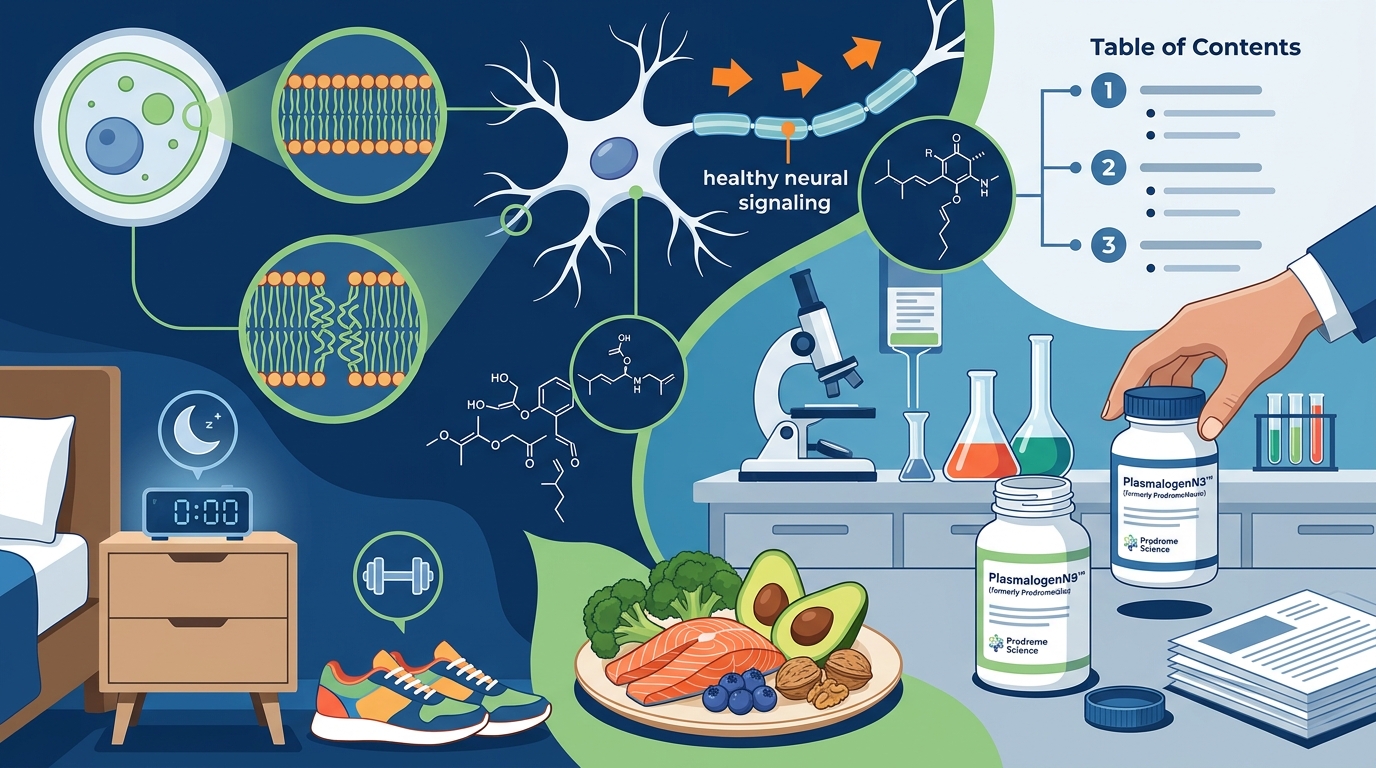
Daily habits that naturally support brain health include consistent sleep, regular physical activity, and a nutrient-dense diet. These lifestyle factors help maintain cellular membrane integrity and promote healthy neural signaling. Prodrome Science emphasizes that structural lipid support, such as plasmalogens, works alongside these routines to optimize long-term brain wellness.
The Role of Cellular Membranes in Daily Function
Brain health is fundamentally tied to the structural integrity of cell membranes. Plasmalogens are a specialized class of ether phospholipids that are highly concentrated in brain tissues, particularly in gray matter and synapses. These lipids are not merely passive components; they actively support membrane fluidity and help buffer oxidative stress within neural cells. According to research published in Lipids in Health and Disease, plasmalogens play a critical role in maintaining the physical stability of membranes under metabolic demand. When these structural lipids are well-maintained, the brain's ability to process information and maintain efficient communication between neurons is supported. This structural foundation is the baseline upon which all other daily habits operate.
Nutritional Strategies for Lipid Support
Dietary choices directly influence the availability of precursors needed for specialized lipid synthesis. While the body produces plasmalogens endogenously, the rate of production can be influenced by the quality of fats consumed. A diet rich in high-quality lipids supports the body's natural ability to maintain membrane health. Prodrome Science offers plasmalogen supplements designed to provide these specific precursors, such as PlasmalogenN3 (formerly ProdromeNeuro) and PlasmalogenN9 (formerly ProdromeGlia). These products are formulated to support the structural needs of both gray and white matter. By integrating targeted lipid nutrition into a daily routine, individuals can help ensure that their cellular membranes remain resilient and functional over time.
Physical Activity and Metabolic Demand
Regular physical activity is one of the most effective ways to support brain health through metabolic stimulation. Exercise increases blood flow and oxygen delivery to the brain, which in turn supports the high energy demands of neural tissue. A study in Frontiers in Physiology highlights how physical activity can modulate inflammatory signaling and support overall cellular resilience. For the brain, this means that the membranes of neurons are better equipped to handle the metabolic byproducts of active signaling. Engaging in consistent, moderate exercise helps maintain the dynamic environment required for healthy synaptic function. This habit complements lipid-based support by ensuring that the structural components of the brain are actively utilized and maintained.
Sleep and Cellular Maintenance
Sleep is the period during which the brain performs essential maintenance tasks, including the clearance of metabolic waste and the consolidation of neural connections. During deep sleep, the brain's glymphatic system becomes more active, helping to maintain a healthy internal environment for neurons. Research indicates that consistent sleep hygiene supports the long-term integrity of neural membranes. When sleep is disrupted, the metabolic stress on brain cells can increase, potentially affecting the stability of specialized lipids like plasmalogens. Prioritizing a consistent sleep schedule is a foundational habit that supports the structural health of the brain. It allows the cellular machinery to function optimally, ensuring that the benefits of nutritional and physical habits are fully realized.
Integrating Lipid Science into Your Routine
Understanding the science behind brain health allows for more intentional lifestyle choices. Prodrome Science provides resources for those who want to dive deeper into the biochemistry of membrane health. Their science blog offers detailed insights into how plasmalogens function and why they are critical for cellular communication. For professionals, the Elite Practitioner Program provides advanced training in lipid-based restorative health. By combining these educational resources with daily habits like sleep and exercise, individuals can create a comprehensive approach to brain wellness. This holistic strategy ensures that both the structural and functional aspects of brain health are supported without the need for medication.
Key Takeaways
- Plasmalogens are specialized lipids that support the structural integrity of brain cell membranes.
- Dietary lipid quality influences the body's ability to maintain healthy neural membranes.
- Regular physical activity supports metabolic demand and cellular resilience in the brain.
- Consistent sleep hygiene is essential for the maintenance of neural tissue.
- Prodrome Science offers targeted supplements to support plasmalogen levels.
- Integrating lipid science into daily routines promotes long-term brain wellness.
Frequently Asked Questions
What are plasmalogens and why are they important for the brain?
Plasmalogens are a unique class of ether phospholipids found in high concentrations in brain cell membranes. They are important because they support membrane fluidity, help buffer oxidative stress, and contribute to the structural stability of neurons and synapses.
How do plasmalogen supplements support brain health?
Plasmalogen supplements provide the specific lipid precursors needed to support the body's natural production of plasmalogens. By ensuring an adequate supply of these structural lipids, supplements can help maintain the integrity and function of brain cell membranes.
Can lifestyle habits replace the need for lipid supplements?
While healthy habits like sleep and exercise are crucial, they do not directly provide the specific structural lipids like plasmalogens. Supplements can serve as a complementary support to ensure that the brain has the necessary building blocks for optimal membrane health.
What is the difference between PlasmalogenN3 and PlasmalogenN9?
PlasmalogenN3 (formerly ProdromeNeuro) is an omega-3 plasmalogen precursor that targets gray matter, while PlasmalogenN9 (formerly ProdromeGlia) is an omega-9 precursor that targets white matter and myelin. Each supports different structural aspects of the brain.
Are plasmalogen supplements safe to take daily?
Prodrome Science products are manufactured in the USA in facilities that follow Good Manufacturing Practice (GMP) standards. As with any supplement, it is advisable to consult with a healthcare provider to determine if a specific product is appropriate for your individual health needs.
How can I learn more about the science of plasmalogens?
You can explore the Prodrome Science blog for in-depth articles on lipid biology and brain health. Additionally, the Elite Practitioner Program offers advanced education for health professionals.